Table of Contents
- Why Menopause Disrupts Sleep: Hormones, Hot Flashes, and Night Sweats
- Sleep Hygiene for Menopause: Building a Bedroom That Works
- Lifestyle Changes for Menopausal Night Sweats and Better Rest
- Natural Ways to Improve Sleep Quality With Herbs and Supplements
- Bioidentical Hormone Replacement Therapy for Sleep: When Natural Isn’t Enough
- Breathwork and Nervous System Regulation for Menopause Insomnia
- Partner-Inclusive Strategies and Environmental Sleep Technology
- Conclusion: Your Next Steps for Restful Nights
- Frequently Asked Questions
Last Updated: September 20, 2026
Why Menopause Disrupts Sleep: Hormones, Hot Flashes, and Night Sweats
Natural ways to improve sleep quality during menopause start with understanding what is actually breaking your rest. Menopause sleep disruption is the cycle of nocturnal awakening caused by falling estrogen and progesterone levels, which destabilize body temperature and the sleep-wake cycle. At Thrive Health Solutions, we see this pattern constantly in patients over 40.
The mechanism matters because it changes the fix. Estrogen decline narrows your body’s thermal neutral zone, the range of temperatures where you sleep without waking. Add vasomotor symptoms like hot flashes and night sweats, and you get sleep fragmentation: brief awakenings you may not even remember, but which wreck sleep architecture.
Hormonal fluctuations also affect melatonin timing and sleep onset. That is why sleep latency, the time it takes to fall asleep, often stretches from minutes to an hour.
NIH overview of menopause symptoms
The psychological layer is the part most guides skip. Poor sleep raises anxiety, and anxiety raises cortisol, which further disrupts sleep maintenance. It becomes a loop.
Sleep Hygiene for Menopause: Building a Bedroom That Works
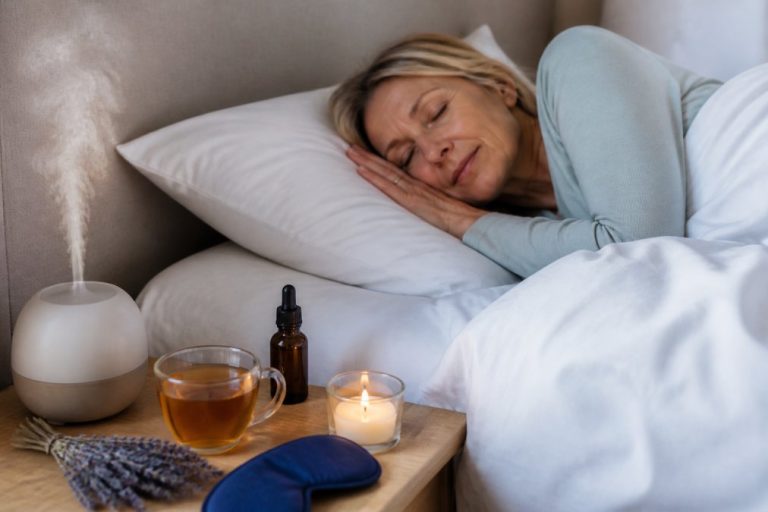
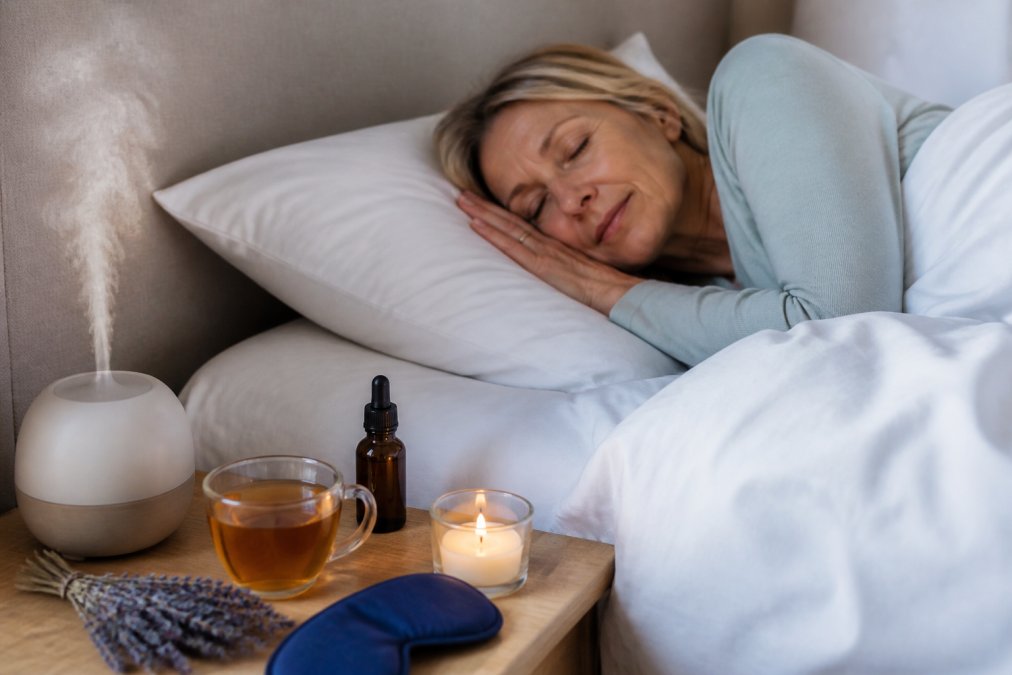
Sleep hygiene for menopause means engineering your bedroom around a body that runs hot and wakes easily. The goal is a sleep environment that removes every friction point between you and sleep onset.
Start with temperature. Most people sleep best in a cool room, and for women in perimenopause that margin is narrower. A fan, breathable fabrics, and a thermostat set lower than you think you need all help.
- Blackout curtains to protect melatonin release
- Cotton or linen sheets, not synthetic blends
- A white noise source to mask partner movement
- Phone charging outside the bedroom
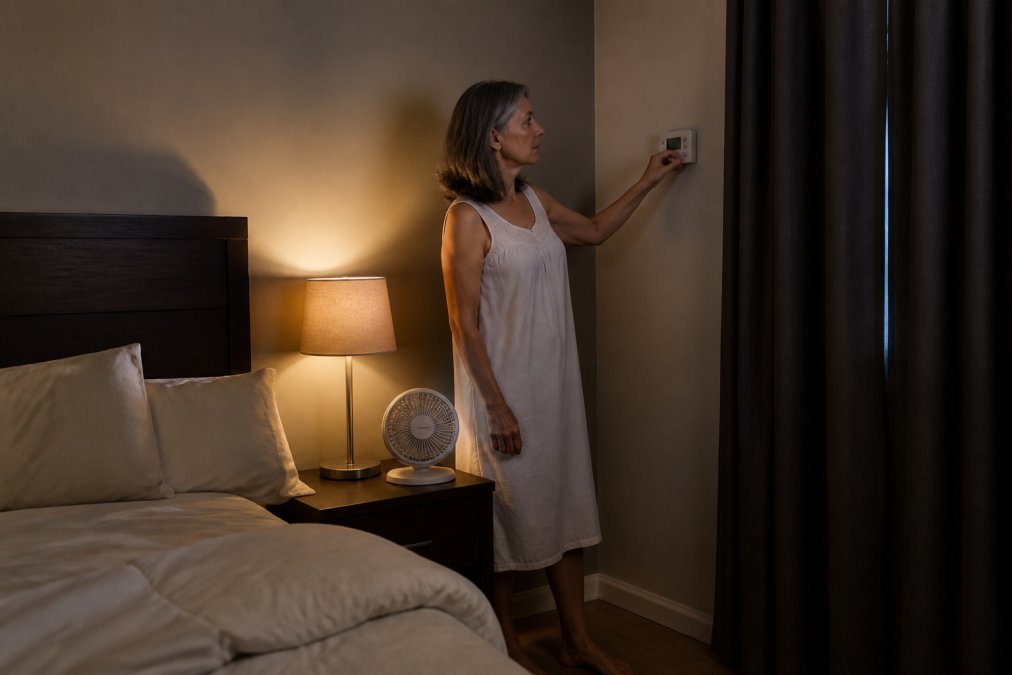
The thing nobody tells you about sleep hygiene practices is that consistency beats intensity. One changed variable, held for two weeks, teaches you more than five changes made at once.
Lifestyle Changes for Menopausal Night Sweats and Better Rest
Lifestyle changes for menopausal night sweats work best when you treat them as a system, not a list of separate tips. Caffeine, alcohol, and spicy food all widen the temperature swing that wakes you.
A common mistake is a glass of wine to “wind down.” Alcohol fragments sleep in the second half of the night and makes night sweats worse.
Physical activity helps, but timing matters. Morning or early afternoon exercise supports circadian rhythm; intense evening workouts push core temperature up right when you need it falling. A short walk after dinner is a better fit than a late spin class.
Track your worst three nights for one week and write down what you ate and drank that evening. Most people find their trigger within a week, and it is usually alcohol or a late heavy meal.
Natural Ways to Improve Sleep Quality With Herbs and Supplements
Herbal options can help, but they are supporting actors, not the lead. Melatonin at a low dose may shorten sleep latency. Valerian root and chamomile are traditional relaxation aids with modest evidence.
| Remedy | Typical Use | What to Watch |
|---|---|---|
| Melatonin | Sleep onset timing | Start low; can cause grogginess |
| Valerian root | Relaxation before bed | Sedative interactions |
| Chamomile | Calming ritual | Allergy risk if ragweed-sensitive |
| Magnesium | Muscle relaxation | Loose stools at high doses |
Check with a clinician before combining supplements with any prescription. NCCIH herbal supplement guidance
Bioidentical Hormone Replacement Therapy for Sleep: When Natural Isn’t Enough
Bioidentical hormone replacement therapy for sleep addresses the root cause when lifestyle changes plateau. If your night sweats and nocturnal awakening persist despite good sleep hygiene, the driver is likely hormonal, not behavioral.
This is where Thrive Health Solutions fits.
Breathwork and Nervous System Regulation for Menopause Insomnia
Breathwork targets the anxiety loop that menopause insomnia feeds on. When estrogen and progesterone fall, the autonomic nervous system becomes less stable, and the 3 a.m. wake-up with a pounding heart is often sympathetic arousal rather than a hot flash. Slow, extended-exhale breathing shifts the balance toward the parasympathetic branch, the “rest and digest” side, which lowers heart rate and primes sleep onset.
- 4-7-8 breathing. Inhale through the nose for 4 counts, hold for 7, exhale through pursed lips for 8. Four cycles is usually enough to notice a drop in arousal. Best used in bed, lights off, when your mind is spinning.
- Box breathing (4-4-4-4). Inhale 4, hold 4, exhale 4, hold 4. The equal counts make it easier to sustain than 4-7-8 and it works well as a pre-bed ritual while you are still upright.
- Physiological sigh. Two short inhales through the nose, then one long, slow exhale through the mouth. This is the fastest known voluntary way to downshift arousal and is the technique to reach for if you wake at 3 a.m. with a jolt.
- Alternate nostril breathing. Close the right nostril, inhale left; close left, exhale right; inhale right, exhale left. One round is about a minute. Useful if you find counting distracting.
If you wake at 3 a.m. with a pounding heart, the issue is often nervous system arousal, not hormones alone. A two-inhale physiological sigh followed by slow 4-7-8 breathing addresses that layer directly, and unlike most sleep tips, you can feel whether it worked within minutes.
NCCIH guidance on relaxation techniques
Partner-Inclusive Strategies and Environmental Sleep Technology
Menopause insomnia is a household problem, not an individual one. If you are waking three times a night and your partner is a light sleeper, the friction compounds: you resent being awake, they resent being woken, and both of you start the day depleted. Most sleep guides ignore this entirely. The strategies below treat the bed as a shared system.
Partner logistics that actually work.
-
Separate blankets, one bed. A king-size bed with two twin duvets solves the thermostat war that no supplement can fix. One person can sleep under a heavy down comforter while the other uses a single cotton sheet.
-
Split-king adjustable base. If budget allows, two independently adjustable sides let one person elevate the head for reflux or reading while the other lies flat.
-
Two-sided mattress toppers. A cooling gel topper on your side only, this is cheaper than replacing the mattress and reversible if it does not help.
-
A “sleep divorce” is not a failure. Separate rooms on the worst nights, or permanently if night sweats are severe, preserves the relationship and both partners’ sleep. Many couples find they sleep better together after a few nights apart, not worse.
-
White noise on both sides. A single white noise machine helps the light sleeper; two, placed on each nightstand, mask movement and cover the sound of one person getting up.
-
Cooling mattress pads. Water- or air-circulating pads (the category includes brands like ChiliSleep and Eight Sleep) let you set a target temperature and, on some models, schedule a drop across the night. For night-sweat-driven awakenings, this is the single most direct environmental intervention. Expect to spend several hundred dollars; the trade-off is a hose or cord at the bedside and a pump that makes some noise.
-
Smart thermostats. A programmable thermostat that drops the bedroom two to four degrees an hour before bed and holds it overnight is a low-cost version of the same idea. Set it and forget it.
-
Wearable sleep trackers. Rings and watches (Oura, Whoop, and the sleep features on Apple Watch and Fitbit) estimate sleep duration, heart rate variability, and nighttime heart rate. The useful signal for menopause is not the sleep score, it is the trend in nighttime heart rate and HRV across weeks. If your resting heart rate is elevated on nights you wake sweating, that is data your clinician can use.
-
Smart pillows and bed cooling fans. These are the most variable category. Some women find a bed fan aimed at the pillowcase helpful; others find the noise disruptive. Buy from a retailer with a generous return window.
Before buying anything, run a one-week experiment: sleep with a separate blanket on your side and a fan aimed at your pillowcase. If that alone reduces your awakenings, you may not need a cooling pad at all. If it does not, you now have a baseline to compare the pad against.
Sleep Foundation guidance on sleep technology
Conclusion: Your Next Steps for Restful Nights
Sleep disruption during menopause is common, but it is not something you have to accept as permanent. Start with the bedroom and the basics, give each change two weeks, and track what actually moves your sleep efficiency.
Frequently Asked Questions
How to stop menopause ruining your sleep?
Start with sleep hygiene for menopause: keep a consistent sleep schedule, cool your bedroom to 65-68°F, and avoid caffeine and alcohol after lunch. For night sweats, choose breathable fabrics and layered bedding. If hot flashes wake you, talk to a doctor about options like bioidentical hormone replacement therapy for sleep. Stress management and breathwork can also help. If sleep disturbances persist, consult a healthcare provider to rule out sleep disorders.
What is the best natural remedy for menopause insomnia?
There is no single best remedy, but several natural approaches can help. Valerian root, chamomile, and melatonin are popular supplements, though evidence varies. Lifestyle changes for menopausal night sweats, such as avoiding spicy foods and exercising earlier in the day, can reduce awakenings. Always check with a doctor before starting supplements, especially if you take other medications.
How can I manage sleep maintenance and middle-of-the-night waking during menopause?
Middle-of-the-night waking often stems from hormonal fluctuations, night sweats, or stress. Keep your bedroom cool and dark, use breathable bedding, and try relaxation techniques like deep breathing if you wake. Avoid checking the clock. If you are awake for more than 20 minutes, get up and do a quiet activity until sleepy. For persistent issues, discuss bioidentical hormone replacement therapy for sleep with a qualified provider.
When should I consult a doctor about menopause-related sleep issues?
See a doctor if sleep problems last more than a few weeks, affect your daily functioning, or come with mood changes, palpitations, or severe hot flashes. A healthcare provider can evaluate for sleep disorders like sleep apnea and discuss treatments, including hormone therapy. If you are in the Denver area, Thrive Health Solutions offers doctor-supervised options tailored to your needs. Book a consultation to explore personalized care.