Table of Contents
- What Peptide Film for Hormone Delivery Actually Is
- How Peptide Film Delivery Works in the Body
- Bioidentical Hormone Replacement Therapy Benefits With Peptide Film
- Peptide Therapy Side Effects and Safety Considerations
- Transdermal Peptide Delivery Systems: How They Compare
- Who Peptide Film Is For and How to Use It
- Frequently Asked Questions
Last Updated: September 21, 2026
What Peptide Film for Hormone Delivery Actually Is
Peptide film is a thin, dissolvable strip placed under the tongue that delivers short-chain amino acids and signaling molecules into the bloodstream. For anyone asking what is peptide film for hormone delivery in Denver, the short answer is this: it is a needle-free way to support hormone balance, and Thrive Health Solutions offers it as part of its doctor-supervised peptide therapy program.
The appeal is simple. No injections. No swallowing pills that get broken down in the stomach. Just a small strip that dissolves in minutes.
Peptides themselves are short chains of amino acids. Your body already makes them. They act as cellular messengers, telling your glands and tissues how to behave. When levels drop with age, some people turn to peptide therapy to support energy, metabolism, and recovery.
How It Differs From Injections and Pills
Injections send peptides straight into tissue or muscle. They work fast, but they require needles, sterile technique, and a level of comfort many people simply do not have.
Pills have the opposite problem. Digestive enzymes break down most peptides before they ever reach the bloodstream.
Film sits between the two. It bypasses the digestive system through sublingual absorption, which means the tissue under your tongue absorbs the peptide directly into nearby blood vessels. No needle, no stomach acid.
The trade-off is bioavailability. Not every peptide absorbs equally well this way, which is why medically supervised dosing matters.
How Peptide Film Delivery Works in the Body
The mouth is not just for eating. Under the tongue sits a dense network of capillaries, the sublingual and buccal mucosa, that can absorb certain compounds directly into circulation. That vascular bed is the entire reason a peptide film works.
When a film dissolves, the active ingredients cross the thin mucosal epithelium and enter the bloodstream through the venous drainage that feeds the jugular vein. This route skips hepatic first-pass metabolism, the liver-filtering step that deactivates a large share of anything you swallow. For peptides, which are fragile amino-acid chains, that bypass is not a minor convenience, it is the difference between a therapeutic dose and a mostly wasted one.
From there, the peptides act as signaling molecules. They bind to receptors on cell surfaces and influence how those cells respond. In hormone delivery, the goal is usually to support the body’s own endocrine regulation rather than replace it outright.
Sublingual Absorption and Digestive Bypass
Sublingual absorption is the mechanism that makes film viable. The tissue under the tongue is thin and heavily vascularized, so compounds can reach systemic circulation in minutes rather than the 30 to 60 minutes a swallowed capsule typically needs to clear the stomach.
Digestive bypass is the payoff. Anything you swallow faces stomach acid and liver processing. A large share of the active ingredient never makes it to where it needs to go. Film avoids both hurdles.
That said, absorption is not uniform, and this is where most general peptide articles stop short. Three variables drive how much of a film dose actually reaches your bloodstream:
- Molecular size. Smaller peptides cross the mucosa more efficiently than larger ones. Very large peptide chains absorb poorly no matter how the film is formulated.
- Formulation. Permeation enhancers, pH buffers, and the film’s dissolution rate all affect how quickly and completely the peptide crosses the tissue.
- Contact time. The strip needs to stay in place, undisturbed, long enough to dissolve. Chewing, swallowing, or talking too soon cuts absorption.
A common pattern is that sublingual delivery produces a faster onset than oral dosing but a lower peak than a subcutaneous injection, a middle ground that trades some bioavailability for convenience and needle-free use. That trade-off is exactly why medically supervised dosing matters: your provider can adjust the protocol around how your body actually responds, not around a one-size-fits-all label.
Do not eat, drink, or brush your teeth for at least 15 minutes before and after placing a film. Residue and moisture can interfere with how well the strip dissolves and absorbs.
Why This Matters for Hormone Signaling
Hormones and the peptides that influence them operate on feedback loops. The pituitary, thyroid, adrenal, and gonadal axes all rely on precise signaling to stay balanced. A delivery method that produces erratic absorption produces erratic signaling, which is why consistency of dose and timing matters more with film than with an injection that delivers a predictable amount every time.
This is also why film is not a universal replacement for injections. For peptides that require high circulating concentrations or very precise dosing, subcutaneous injection remains the standard. Film is best understood as a delivery option for specific peptides and specific protocols, chosen after labs and a clinical review, not as a blanket alternative.
Bioidentical Hormone Replacement Therapy Benefits With Peptide Film
Bioidentical hormone replacement therapy benefits often center on symptom relief. People dealing with fatigue, low libido, mood swings, and stubborn weight gain frequently report feeling more like themselves again.
Pairing that therapy with peptide film can support several areas at once:
- Hormone optimization through medically supervised protocols
- Metabolic health and body composition support
- Tissue repair and recovery after physical strain
- Lean muscle development when combined with activity
- Mitochondrial efficiency, which affects daily energy
The key word is support.
Peptide Therapy Side Effects and Safety Considerations
Peptide therapy side effects are usually mild, but they are real. Common reports include redness or irritation at the application site, mild nausea, and headache.
Safety comes down to three things:
- Medical supervision from a qualified provider
- Quality sourcing of compounded medications
- Honest screening for conditions that rule out treatment
Transdermal Peptide Delivery Systems: How They Compare
Transdermal peptide delivery systems include creams, gels, patches, and films. Each moves peptides across the skin or mucous membranes rather than through a needle.
How do they stack up?
| Method | Speed | Convenience | Best For |
|---|---|---|---|
| Peptide film | Fast | High | Daily use, needle-free routines |
| Creams and gels | Moderate | High | Larger surface areas |
| Patches | Slow, steady | High | Extended release |
| Subcutaneous injections | Fastest | Low | Precise, higher-dose protocols |
Who Peptide Film Is For and How to Use It
Peptide film suits adults dealing with hormonal decline who want a needle-free option. It tends to fit people who value a simple daily routine and are willing to stay consistent. It is generally a poor fit for anyone who wants to self-direct dosing, who cannot commit to a daily schedule, or who has a hormone-sensitive condition that a provider has not cleared.

Step-by-Step: How to Take a Peptide Film
Most top-ranking peptide articles describe injections in detail and leave film users to guess. Here is the actual sequence:
- Prep your mouth. Wash and dry your hands. Avoid eating, drinking, smoking, or brushing your teeth for at least 15 minutes beforehand, food residue, toothpaste, and moisture all interfere with absorption.
- Position the strip. Place the film flat under your tongue, slightly off-center. Do not fold it or press it against your teeth.
- Let it dissolve. Keep your tongue still and let the strip dissolve fully, typically a few minutes. Do not chew, swallow, or move it around. Swallowing the film sends the dose down the digestive path you are trying to avoid.
- Hold the contact. Resist the urge to talk or sip water until the film is completely gone. Contact time is absorption time.
- Wait before eating or drinking. Give it at least 15 minutes after the strip dissolves before food, drink, or brushing.
- Log the dose. Note the time and any symptoms in a simple journal or app. Patterns across weeks are what your provider uses to fine-tune the protocol.
Never place a film if your mouth is dry, cracked, or irritated. Broken mucosa changes absorption and can increase local irritation. Wait until the tissue has healed.
Storage, Stability, and Daily Routine
Store film in a cool, dry place, away from direct sunlight and moisture. Heat and humidity can degrade the strip before you ever use it. Keep it out of the bathroom, steam is the enemy here, and never leave it in a hot car or near a stove.
Storing film in a hot car or a steamy bathroom can weaken the active ingredients. A degraded strip may not deliver the dose you expect, which throws off your whole protocol.
What to Expect and When
Timelines vary by peptide, dose, and the person. Timelines vary by peptide, dose, and the person. Your provider should set expectations based on your specific protocol, not on a generic marketing claim.
Frequently Asked Questions
How does transdermal peptide film delivery work?
A thin film is placed under the tongue, where it dissolves against the mucous membrane. Because the tissue there is dense with small blood vessels, compounds absorb directly into the bloodstream instead of passing through the stomach and liver. That digestive bypass is why a peptide film can deliver short-chain amino acids and signaling molecules at a lower dose than an oral capsule. Placement and timing matter, so follow the specific instructions your clinician gives you.
Is peptide film more effective than traditional hormone injections?
Neither option wins across the board. Subcutaneous injections typically produce the highest and most predictable bioavailability, which is why they remain the standard for many therapeutic protocols. Peptide film offers steadier sublingual absorption without needles, which suits people who dislike injections or want a simpler daily routine. The right choice depends on the peptide, your goals, and how your body responds. A medically supervised provider can compare both for your situation.
What are the most common peptide therapy side effects?
Reported side effects vary by peptide and dose but often include headache, fatigue, or changes in appetite during the first weeks. Some people notice water retention or mood shifts. Most reactions are temporary and ease as the body adjusts. Because peptides influence endocrine regulation, unsupervised use carries more risk. Report any new or persistent symptom to your prescribing clinician rather than adjusting the dose yourself.
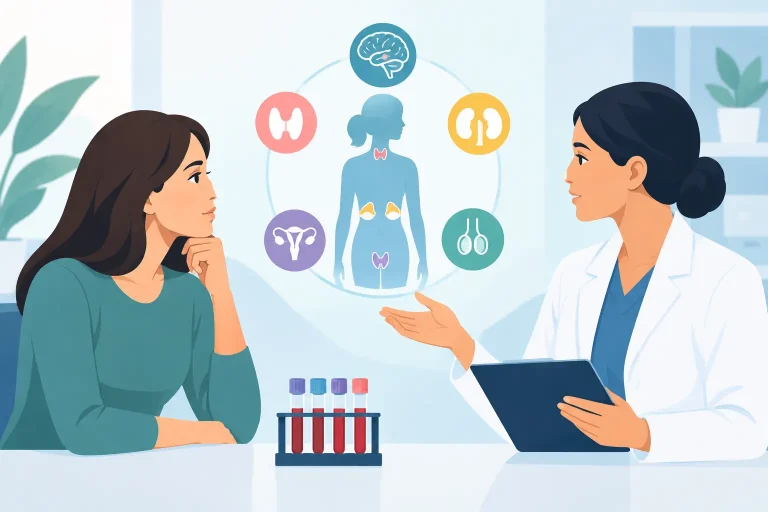
How do I know if I am a candidate for peptide film delivery?
Candidacy is determined through lab work and a clinical consultation, not a symptom checklist. A provider typically reviews hormone panels, thyroid and adrenal function, metabolic markers, and your health history before recommending any protocol. Adults over 40 dealing with fatigue, low libido, stubborn weight gain, or mood changes are common candidates, but the labs decide. If a clinic offers treatment without testing first, that is a reason to look elsewhere.