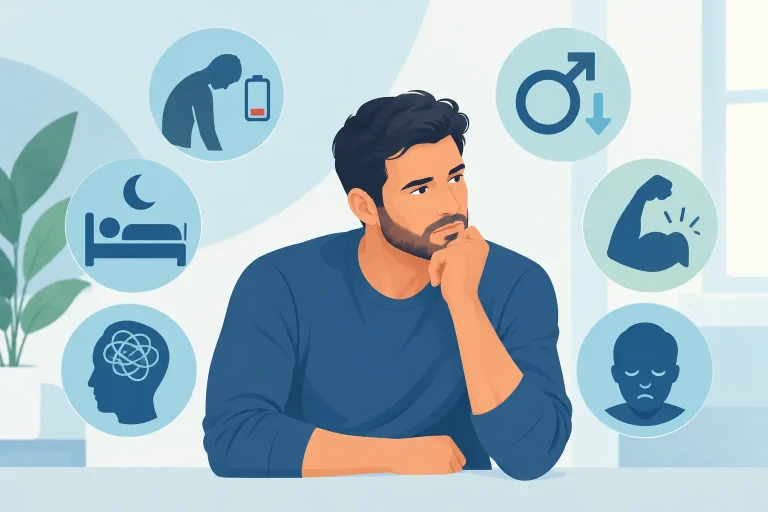
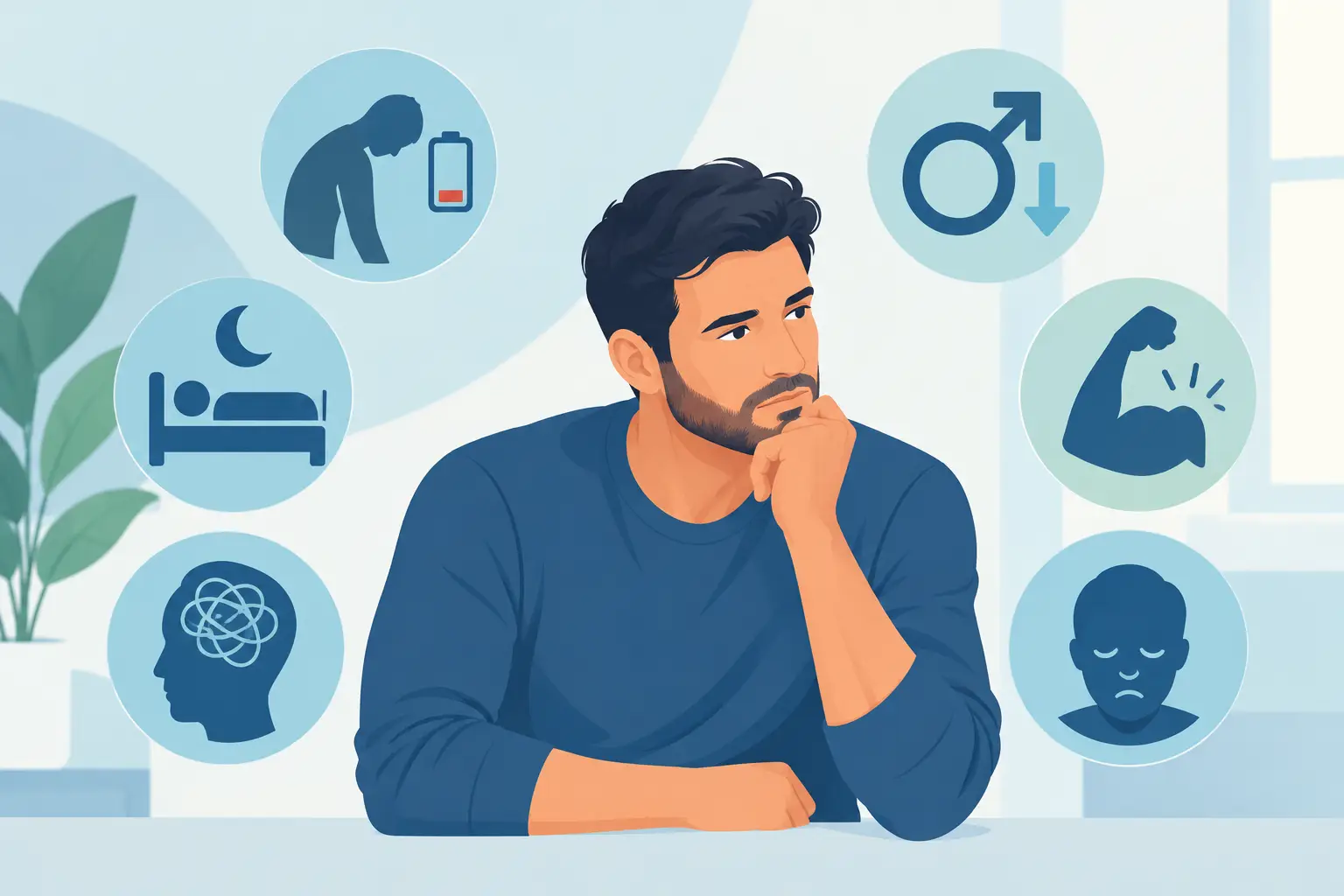
Feeling unlike yourself is not a diagnosis, but it is a signal worth taking seriously. If you want to assess symptoms of low testosterone, look for a persistent pattern rather than one rough week at work, a few restless nights, or a temporary dip in gym performance. Testosterone affects far more than libido. It can influence energy, body composition, mood, strength, motivation, sleep, and how confidently you move through your day.
For many men, the frustration is not knowing whether their symptoms are simply part of getting older, a consequence of stress, or something their body needs help correcting. The answer starts with an honest assessment, targeted lab work, and physician-guided care that sees the whole picture.
How to Assess Symptoms of Low Testosterone
Low testosterone, also called low T or testosterone deficiency, is not defined by a single symptom. The most meaningful clue is a combination of changes that persist for weeks or months and interfere with how you feel, look, or function.
Sexual symptoms are often the first changes men notice. These can include reduced interest in sex, fewer spontaneous or morning erections, erectile difficulties, or a lower sense of sexual satisfaction. Erectile dysfunction can have several causes, including blood-flow issues, medication effects, anxiety, diabetes, and cardiovascular disease, so it should never be treated as automatic proof of low T. Still, when it appears alongside other changes, it deserves a closer look.
Energy and physical performance can also shift. You may feel tired despite getting enough sleep, lose the drive to work out, struggle to recover after exercise, or find that strength and muscle tone are harder to maintain. Some men notice a gradual increase in body fat, especially around the midsection, even when their routines have not changed dramatically.
Mood and mental performance matter just as much. Low testosterone may contribute to irritability, low motivation, reduced confidence, difficulty concentrating, or a flat feeling that is hard to explain. These symptoms overlap with burnout, depression, chronic stress, and poor sleep, which is exactly why a real clinical evaluation matters.
Other signs may include:
- Reduced lean muscle mass or declining exercise capacity
- Increased body fat or difficulty making progress with weight loss
- Hot flashes or increased sweating in more pronounced cases
- Decreased body hair growth or changes in beard growth
- Lower bone density over time, which can raise fracture risk
- Fertility concerns related to reduced sperm production
Symptoms do not need to be dramatic to be valid. A gradual decline in vitality can still affect your relationships, work performance, training, and sense of self. You do not need to wait until you are exhausted or disconnected from the life you want to live before asking questions.
Look for Patterns, Not Isolated Symptoms
The most useful way to assess symptoms of low testosterone is to track when they started, how often they occur, and whether they are getting worse. A low sex drive after a major deadline, poor sleep during travel, or sluggish workouts after a cold may be temporary. But a consistent change in energy, mood, sexual function, and body composition is harder to dismiss.
Age can play a role. Testosterone levels commonly decline gradually with age, but age alone does not explain every symptom. A man in his 30s can have clinically low testosterone, while a man in his 50s may have healthy levels and feel excellent. Health status, sleep quality, body fat percentage, medications, alcohol use, chronic illness, and stress all influence hormone balance.
Pay attention to your baseline. Are you less interested in activities you used to enjoy? Have your workouts become disproportionately difficult? Are you relying on more caffeine just to feel normal? Has your waistline changed while your routine has stayed relatively consistent? Those details give a provider a far more accurate picture than simply saying, “I feel tired.”
Why Symptoms Alone Cannot Confirm Low T
A symptom checklist can tell you whether testing is reasonable, but it cannot diagnose hormone deficiency. Testosterone naturally fluctuates throughout the day and is generally highest in the morning. That means a single test taken at the wrong time, during illness, or after unusually poor sleep may not reflect your usual hormone status.
A thorough evaluation typically includes a discussion of your symptoms and medical history, followed by properly timed bloodwork. Depending on your needs, a provider may review total testosterone, free testosterone, sex hormone-binding globulin, estradiol, blood counts, thyroid markers, metabolic health, and other relevant measures. The right panel depends on your age, symptoms, medications, and health history.
This broader approach matters because several conditions can mimic low testosterone. Sleep apnea can cause profound fatigue and lower testosterone levels. Thyroid dysfunction may affect mood, weight, and energy. Depression, anemia, insulin resistance, overtraining, and certain medications can also produce similar symptoms. Treating the wrong problem is not optimization. It is wasted time.
Be Honest About Lifestyle Factors
Before assuming testosterone is the entire answer, take a clear look at the factors that can suppress it or worsen similar symptoms. Chronic sleep deprivation, significant weight gain, excessive alcohol intake, unmanaged stress, inactivity, and highly restrictive dieting can all work against healthy hormone function.
That does not mean you should be told to “just sleep more” and sent away. Lifestyle support is valuable, but it is not a substitute for medical investigation when symptoms are persistent. The strongest plan may combine better sleep, resistance training, nutrition support, weight management, and physician-directed hormone care when appropriate.
For men carrying excess weight, medically supervised weight-loss treatment can be especially relevant. Improving body composition may support metabolic health and hormone balance, while also increasing energy and confidence. But the sequence matters. Your care should be personalized, not built around a one-size-fits-all protocol.
What a Physician-Guided Evaluation Should Include
A quality low testosterone consultation should feel specific to you. Your provider should ask about your goals, whether that means restoring libido, improving training recovery, protecting long-term health, losing body fat, or feeling sharper at work. They should also review your personal and family health history, current medications, sleep habits, fertility plans, and cardiovascular risk factors.
Fertility deserves particular attention. Testosterone replacement therapy can reduce sperm production, so it may not be the right first-line path for men who are actively trying to conceive. There may be alternative approaches depending on the cause of symptoms and your goals. This is one of many reasons buying hormones online or using a friend’s medication is a poor substitute for medical care.
If lab results and symptoms support treatment, the conversation should include delivery options, dosing, expected timelines, follow-up testing, and potential side effects. Testosterone shots, pellets, creams, and other approaches each have trade-offs. Some patients prefer the consistency and convenience of longer-lasting options, while others want more dosing flexibility. The best choice depends on your lifestyle, response to treatment, and clinical needs.
Monitoring is not optional. Testosterone therapy may require follow-up labs and adjustments to help keep treatment effective and appropriate. Your provider may monitor hormone levels, red blood cell count, prostate-related markers when indicated, estradiol, and how your symptoms are actually changing. The goal is not to chase a number. It is to help you feel and function better with thoughtful oversight.
When to Schedule an Evaluation
Consider scheduling a hormone evaluation if symptoms have persisted for several weeks or longer, especially if you are experiencing reduced libido, erectile changes, fatigue, declining strength, unexplained body-composition shifts, or a noticeable loss of motivation. Make an appointment sooner if symptoms are affecting your relationship, mental health, work, or ability to stay active.
At Thrive Health Solutions, doctor-supervised hormone optimization is designed around individualized lab review, personalized dosing, and ongoing follow-up. You deserve more than vague reassurance that feeling depleted is normal. You deserve clear answers and a plan built around your health, performance, and confidence.
The next right move is simple: pay attention to the pattern, get the right testing, and let credible medical guidance turn uncertainty into a path forward.