
Table of Contents
- Symptoms of Low Testosterone in Men Over 40
- Weight Loss and Body Composition: The Fastest Way to Boost Testosterone
- Impact of Strength Training on Hormone Health
- Foods That Increase Testosterone Naturally
- Sleep, Stress, and Micronutrients: The Recovery Side of Testosterone
- When to See a Doctor for Low Testosterone
- Frequently Asked Questions
Last Updated: September 16, 2026
Symptoms of Low Testosterone in Men Over 40
Learning how to naturally boost testosterone for men over 40 starts with recognizing what declining levels actually feel like. According to Harvard Health Publishing’s overview of age-related testosterone decline, men can raise testosterone production by up to 30% through a balanced diet and regular exercise.
Low testosterone (hypogonadism) is a clinical condition in which the body produces insufficient testosterone to support normal physical and psychological function. Symptoms in men over 40 typically include:
- Persistent fatigue despite adequate sleep
- Reduced libido and weaker erections
- Loss of muscle mass and increased visceral fat
- Mood swings, irritability, or low motivation
- Brain fog and difficulty concentrating
- Thinning body hair and reduced vitality
The psychological impact is the part most guides skip. Men with low testosterone often describe a flatness that no amount of caffeine fixes. That matters, because mood and hormonal balance feed each other: chronic stress raises cortisol, which suppresses the endocrine system’s output.
Weight Loss and Body Composition: The Fastest Way to Boost Testosterone
Excess visceral fat is the single biggest self-inflicted drag on testosterone. Fat tissue contains aromatase, an enzyme that converts testosterone into estrogen. Carry more fat, and you convert more of your own testosterone away.
The fix is unglamorous. Lose the weight, and serum testosterone tends to rise with it. A 2026 study in the National Library of Medicine found that Mediterranean dietary patterns emphasizing whole foods, healthy fats, and antioxidant-rich plants actively support endogenous testosterone production in the context of age-related hormonal changes. That means olive oil, fish, vegetables, and nuts, not a crash diet.
Track two numbers: body mass index and waist circumference. Waist size above 40 inches signals visceral fat worth addressing. Improving insulin sensitivity alongside weight loss compounds the benefit, since metabolic health and hormonal balance move together.
Impact of Strength Training on Hormone Health
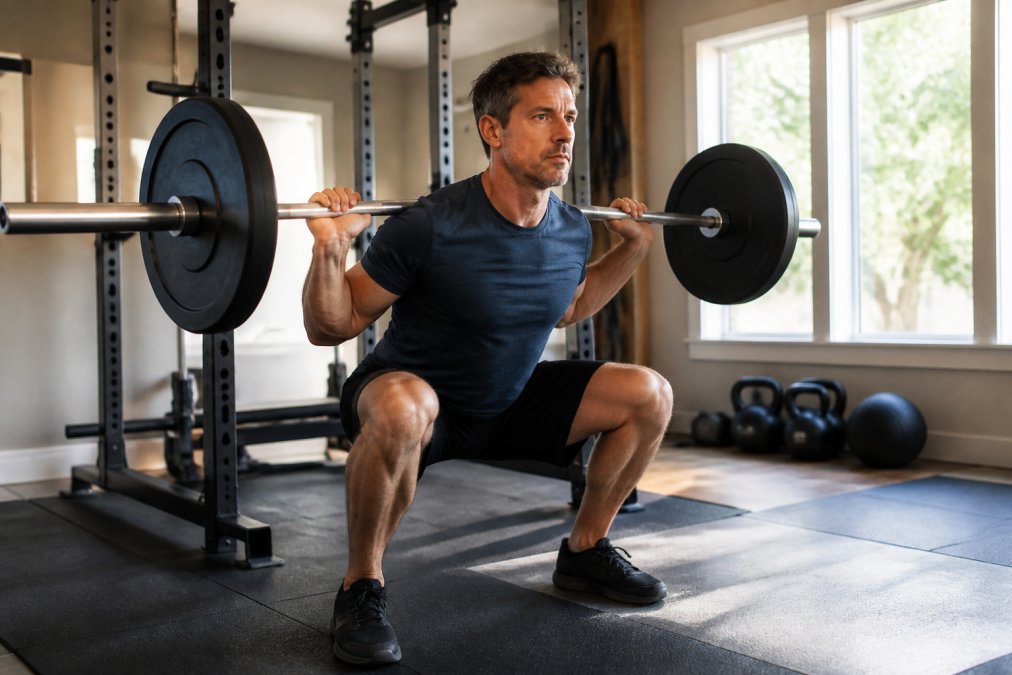
Resistance training is the most reliable natural lever you have. Compound lifts, squats, deadlifts, presses, and rows, drive acute spikes in anabolic hormones and build the muscle mass that keeps testosterone elevated over time. But the training that worked at 25 is not the training that works at 45, and most guides gloss over that difference. Optimizing recovery through a consistent natural night routine ensures that the hormonal benefits of these demanding sessions are fully realized rather than squandered by poor sleep quality.
Why the 40+ Body Recovers Differently
Three things change after 40 that directly affect how you should train:
- Tendon and connective tissue recovery slows more than muscle recovery does, so joint-friendly loading and warm-up sets matter more than they used to.
- Sleep architecture shifts, and since the largest testosterone pulse of the day arrives during deep sleep, a bad night costs you more hormonal return on the same workout.
- Baseline cortisol tends to run higher with age and life stress, so long, grinding sessions can push you into a catabolic state instead of an anabolic one.
A common pattern: men over 40 who train hard six days a week and feel worse, not better. The problem is usually volume, not effort.
A Sample 40+ Recovery-Focused Split
This is a four-day upper/lower structure built around recovery, not exhaustion. Adjust loads to leave one to two reps in reserve on most sets.
| Day | Focus | Key Movements | Sets x Reps |
|---|---|---|---|
| 1 | Lower | Back squat, Romanian deadlift, split squat, calf raise | 3-4 x 5-8 |
| 2 | Upper | Bench press, row, overhead press, pull-up or lat pulldown | 3-4 x 5-8 |
| 3 | Rest / Walk | 30-45 min easy walk, mobility work | , |
| 4 | Lower | Trap-bar deadlift, leg press, hip thrust, core | 3 x 6-10 |
| 5 | Upper | Incline press, cable row, lateral raise, arms | 3 x 8-12 |
| 6-7 | Rest | Sleep, protein, light activity | , |
Two rules govern the whole plan:
- Keep sessions under 60 minutes. Beyond that, cortisol climbs and the hormonal benefit flattens.
- Add load slowly. Progress one variable at a time, reps first, then weight, and take a deload week every six to eight weeks.
The Recovery Metrics That Actually Matter
You cannot out-train poor recovery. Track these four, and treat any two trending the wrong way as a signal to back off:
- Morning resting heart rate, a jump of several beats over your baseline often precedes overtraining.
- Grip strength and mood, both drop before performance does.
- Sleep duration, aim for 7-9 hours; this is the window when most testosterone is produced.
- Waist circumference, a rising waistline despite training means recovery and nutrition need attention.
For men over 40, the goal is not to train more, it is to train hard enough to stimulate adaptation and recover completely enough to keep the hormonal benefit. Fewer, better sessions beat more, worse ones.
Muscle hypertrophy supports hormonal balance, but only if you recover. Overtraining raises cortisol and suppresses the very hormones you’re chasing.
Foods That Increase Testosterone Naturally
No single food fixes low testosterone, but a consistent dietary pattern moves the needle. Foods that increase testosterone naturally cluster around three things: zinc, vitamin D, and healthy fats.
- Oysters and red meat for zinc; zinc deficiency directly impairs testosterone production
- Fatty fish, eggs, and fortified dairy for vitamin D
- Leafy greens, nuts, and seeds for magnesium intake
- Olive oil and avocado for monounsaturated fats
Research from the National Institutes of Health shows fenugreek seed extracts and ashwagandha root extracts show potential in supporting testosterone levels. Both appear in the micronutrient stack discussed below.
Sleep, Stress, and Micronutrients: The Recovery Side of Testosterone
Sleep and stress control are where most men over 40 quietly lose the battle. Testosterone production follows a circadian rhythm, peaking during deep sleep. Cut sleep to five hours and you blunt that peak.
Chronic stress keeps cortisol elevated, and cortisol and testosterone are locked in opposition. Practice sleep hygiene: consistent bedtime, dark cool room, no screens an hour before. For stress, the tools that work are boring and effective, including breathwork, walking, and boundaries on work hours.
Micronutrients worth discussing with a clinician:
| Nutrient | Role in Hormone Health | Common Food Sources |
|---|---|---|
| Zinc | Supports testosterone synthesis | Oysters, beef, pumpkin seeds |
| Vitamin D | Linked to healthy testosterone levels | Fatty fish, eggs, sunlight |
| Magnesium | Supports sleep and free testosterone | Greens, nuts, seeds |
| Ashwagandha | May support stress response and levels | Supplement form |
| Fenugreek | May support libido and levels | Supplement form |
Self-prescribing high-dose supplements without a blood panel can waste money and, in some cases, mask an underlying thyroid or pituitary issue. Test first, then supplement.
When to See a Doctor for Low Testosterone
Lifestyle changes optimize testosterone, but they don’t resolve clinical hypogonadism.
Interpreting Your Blood Work
- Total testosterone is the headline number, but it includes testosterone bound to SHBG and albumin, which your body can’t readily use.
- Free testosterone is the fraction actually available to tissues. It tends to fall faster with age than total testosterone, so a ‘normal’ total can hide a low free level.
- SHBG rises with age, which means two men with identical total testosterone can have very different free levels.
- LH tells you whether the problem is in the testicles (high LH) or the brain’s signaling (low or normal LH), a distinction that changes the entire treatment conversation.
Get your blood drawn before 10 a.m. Testosterone peaks in the morning, and an afternoon draw can read falsely low.
Medications That Can Suppress Testosterone
- Opioid pain relievers, long-term use is well known to suppress the hormonal axis and lower testosterone.
- Glucocorticoids (prednisone and similar), chronic use can blunt LH signaling and reduce testosterone production.
- Some antidepressants, particularly SSRIs, are associated with sexual side effects and can affect hormonal balance.
- Statins and blood pressure medications, the picture is mixed. Some evidence suggests certain statins may modestly affect testosterone synthesis, while others appear neutral. This is exactly the kind of question to raise with the prescriber rather than stop a medication on your own.
Red Flags That Warrant Prompt Evaluation
See a doctor promptly if you notice:
- Symptoms that interfere with work, relationships, or mood
- Erectile dysfunction that’s new or worsening
- Unexplained weight gain despite diet and exercise
- Fatigue that doesn’t improve with sleep
- Loss of body hair, breast tenderness, or a noticeable drop in testicle size
Frequently Asked Questions
What are the first signs of low testosterone in men over 40?
Early signs include persistent fatigue, reduced libido, mood swings, difficulty concentrating, and loss of muscle mass despite regular exercise. Many men also notice increased belly fat and slower recovery from workouts. These symptoms overlap with normal aging, so a blood test is the only way to confirm low levels. If you notice several of these changes lasting more than a few weeks, talk to a doctor about testing your serum testosterone.
Can lifestyle changes really increase testosterone levels?
Yes. Weight loss through a balanced diet and regular exercise can boost testosterone production by up to 30%, according to Harvard Health Publishing. Resistance training, improved sleep hygiene, and stress reduction all support hormonal balance. That said, lifestyle changes work best for optimization, not for clinical hypogonadism. If symptoms persist after several months of consistent changes, a medical evaluation is the next step.
Which foods are best for supporting natural testosterone levels?
A Mediterranean dietary pattern emphasizing whole foods, healthy fats, and antioxidant-rich plants supports endogenous testosterone production, according to a 2026 study in the National Library of Medicine. Include eggs, fatty fish, leafy greens, nuts, and olive oil. Fenugreek and ashwagandha also show potential in supporting testosterone levels, per a 2020 NIH review. Avoid heavily processed foods and excess alcohol, which can raise estrogen conversion and visceral fat.
When should a man consider medical intervention for low testosterone?
If you have persistent symptoms like low libido, fatigue, or mood changes and blood work confirms low serum testosterone, medical intervention may be appropriate. A doctor can interpret your blood panel, check free testosterone and sex hormone-binding globulin, and rule out other causes. Lifestyle changes remain the foundation, but clinical hypogonadism may require treatments such as testosterone replacement therapy. Always consult a qualified professional before starting any treatment.