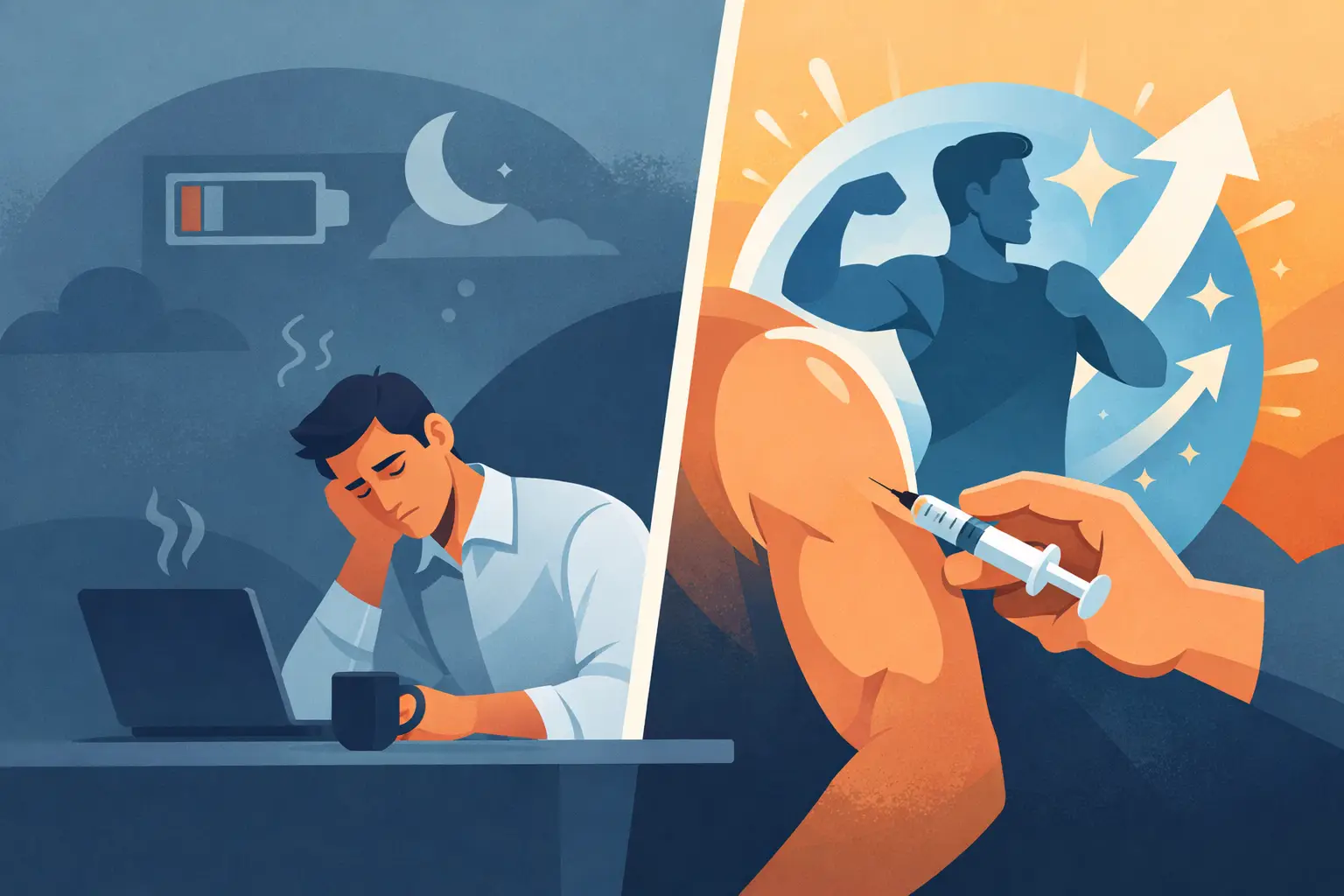
Dragging through your afternoon workouts, relying on caffeine just to stay sharp at work, and feeling like your drive has flatlined is not just a getting-older story. For many men, testosterone shots for low energy become part of the conversation when fatigue starts showing up alongside lower motivation, weaker recovery, reduced sex drive, brain fog, and a general sense that they are operating far below their best.
That conversation deserves more than hype. It deserves real answers, clear testing, and a treatment plan built around results you can actually feel.
When low energy is more than a busy schedule
Low energy is one of the most common complaints in adult men, but it is also one of the easiest symptoms to misread. Stress, poor sleep, overtraining, under-eating, depression, thyroid dysfunction, sleep apnea, blood sugar swings, and nutrient deficiencies can all leave you exhausted. So can low testosterone.
The key difference is the pattern. Men with low testosterone often describe a broader drop in performance. They may feel tired, but also less focused, less resilient, less motivated, and less interested in sex. They might notice more body fat around the midsection, a harder time building or keeping muscle, slower recovery after exercise, and a mood that feels flatter than usual.
This is why treatment should never start with a guess. If energy is low, the right move is to look at the full picture, not chase a quick fix.
How testosterone shots for low energy are meant to help
Testosterone supports far more than libido. It plays a major role in muscle maintenance, red blood cell production, cognitive function, mood, and overall vitality. When levels are truly low, restoring testosterone to an appropriate range can help men feel more like themselves again.
For the right patient, testosterone shots may improve daily energy, mental clarity, physical stamina, workout recovery, sex drive, and body composition over time. Some men report that the biggest change is not a dramatic jolt of energy, but a steady return of momentum. They wake up feeling more capable. They stop crashing as hard. They feel more engaged in work, training, and life.
That said, testosterone is not an instant stimulant. It is not the same thing as taking a pre-workout or another cup of coffee. Results tend to build over weeks, and the response depends on whether low testosterone was actually part of the problem in the first place.
Who is a good candidate for testosterone shots?
The best candidates are men with both symptoms and lab-confirmed low testosterone. That distinction matters.
A man can feel tired and still have normal testosterone levels. In that case, shots may not solve the issue and may expose him to treatment he does not need. On the other hand, a man with clearly low levels and classic symptoms may see meaningful improvement with properly supervised therapy.
Good candidates often include men who are dealing with persistent fatigue, low libido, reduced strength, poor recovery, mood changes, and age-related hormone decline. Men in their 30s, 40s, 50s, and beyond can all experience this, especially when stress, weight gain, sleep disruption, or metabolic issues are also in play.
The strongest treatment plans do not isolate one lab value and call it a day. They look at symptoms, medical history, body composition, lifestyle, and follow-up testing. That is where a premium, physician-supervised approach makes a real difference.
What to expect before starting testosterone shots for low energy
A quality clinic will not hand out testosterone based on a quick online quiz or a vague complaint of fatigue. Proper evaluation usually starts with a detailed consultation and lab work. This may include total testosterone, free testosterone, estradiol, blood counts, PSA when appropriate, and other markers that help explain why you feel the way you do.
This matters because low testosterone can be primary, meaning the testes are not producing enough, or secondary, meaning the brain signals that regulate hormone production are off. It also matters because some men are not truly deficient but are dealing with poor sleep, elevated cortisol, insulin resistance, or another issue that needs attention first.
If testosterone therapy makes sense, dosing should be individualized. There is no universal amount that fits every man. Your age, baseline hormone levels, symptoms, response over time, and side effect profile all shape what the right plan looks like.
How fast do results happen?
This is where expectations need to be realistic. Some men notice improvements in mood, motivation, or libido within a few weeks. Physical changes such as better gym performance, improved muscle retention, and reduced body fat often take longer. Energy may improve gradually rather than all at once.
It also depends on what else is working against you. If testosterone is low but sleep is still poor, stress is still high, alcohol intake is heavy, and nutrition is inconsistent, results can be slower and less dramatic. Hormone optimization works best when it is part of a broader strategy to improve how you look, feel, and function.
That is one reason many patients prefer a whole-body clinic model. Instead of treating energy like an isolated symptom, the focus can shift to the full performance picture, including weight, recovery, metabolic health, and long-term vitality.
The trade-offs and risks patients should understand
Testosterone therapy can be a powerful treatment, but it is still medical therapy. That means benefits and trade-offs need to be discussed clearly.
Potential side effects can include acne, fluid retention, mood shifts, increased red blood cell count, breast tenderness, and changes in fertility. Some men feel great at first and then realize their dosing schedule needs adjustment because energy peaks and dips too much between injections. Others may need monitoring for estrogen balance or hematocrit levels.
Fertility is a major point that gets overlooked. Testosterone shots can suppress the body’s natural production and may reduce sperm production. If a man wants to preserve fertility, that should be part of the conversation before treatment begins, not after.
This is exactly why self-treating, buying questionable products online, or using a friend’s protocol is a bad move. Precision matters. Monitoring matters. Medical oversight matters.
Why injections are chosen over other testosterone options
Testosterone can be delivered in several forms, including creams, gels, pellets, and injections. Shots are popular because they are effective, measurable, and easy to adjust when managed properly.
For many men, injections offer reliable absorption and more control over dosing. If your numbers are too low, too high, or your symptoms are not improving as expected, the treatment plan can be refined. That flexibility is valuable, especially early on.
Still, injections are not automatically the best fit for every patient. Some men prefer other delivery methods based on convenience, comfort, or lifestyle. The best option depends on your goals, your routine, and how your body responds.
Why the right clinic changes the outcome
Not all testosterone care is equal. Some programs are built to push prescriptions. Others are built to deliver measurable, sustainable change.
A high-level clinic does more than confirm a low number and send you on your way. It tracks your response, adjusts your dosing, watches your labs, and helps connect hormone treatment to the bigger goal of feeling stronger, sharper, leaner, and more energized. That means looking beyond the shot itself and asking what will actually move the needle for your energy, confidence, and performance.
At Thrive Health Solutions, that kind of personalized, medically supervised care is part of the point. When treatment is tailored instead of generic, patients are far more likely to see and feel the difference.
So, do testosterone shots for low energy work?
They can work exceptionally well for the right patient. If low testosterone is truly driving your fatigue, properly managed treatment can help restore energy, drive, recovery, and overall quality of life. If your energy issues are coming from another source, testosterone alone is unlikely to be the answer.
That is the real takeaway. Low energy should not be brushed off, and it should not be self-diagnosed either. When you get the right testing, the right interpretation, and the right treatment plan, you stop guessing and start moving toward a version of yourself that feels stronger, more focused, and fully switched on.
If your energy has been slipping and your body no longer feels like it is working with you, that is worth taking seriously. The right next step is not chasing another temporary boost. It is finding out what your body actually needs and giving it a plan built to perform.