

Table of Contents
- Understanding Bioidentical vs Synthetic Hormone Replacement Therapy
- Chemical Structure and Molecular Differences
- FDA Approval Status and Regulatory Landscape
- Benefits of Bioidentical Hormone Therapy
- Risks of Synthetic Hormone Replacement
- How Long Does Hormone Replacement Therapy Take to Work
- Customized Dosing: Compounding Pharmacies vs Mass-Produced Options
- Safety, Clinical Evidence, and Medical Consensus
Bioidentical vs Synthetic Hormone Replacement Therapy
Last Updated: July 10, 2026
The distinction between bioidentical vs synthetic hormone replacement therapy has become increasingly important for patients navigating menopause and hormonal imbalance. The molecular structure of these hormones differs fundamentally, which affects how your body processes and responds to treatment. Below, we’ll break down the chemistry, safety profiles, clinical evidence, and practical considerations that should inform your decision.
Understanding Bioidentical vs Synthetic Hormone Replacement Therapy
Bioidentical hormones are laboratory-synthesized hormones that match the exact molecular structure of hormones your body naturally produces. They’re derived from plant sources, typically soy or yams, then modified to become chemically identical to human estradiol, progesterone, and other endocrine compounds.
Synthetic hormones are chemically different from what your body makes. Common options include conjugated equine estrogens (derived from pregnant mare urine) and progestins (synthetic versions of progesterone). These activate the same hormone receptors as bioidentical hormones but with different molecular structures, producing different pharmacokinetics, how your body absorbs, distributes, metabolizes, and eliminates them.
Your body may respond differently to each type. Some patients report fewer side effects with bioidentical hormones, while others see excellent results with FDA-approved synthetic options. The choice depends on your individual tolerance, health history, and treatment goals.
The “natural” label on hormone therapy can be misleading. Bioidentical hormones are synthesized in a lab, not extracted directly from plants. What makes them “bioidentical” is the molecular structure, not the manufacturing process.
Chemical Structure and Molecular Differences
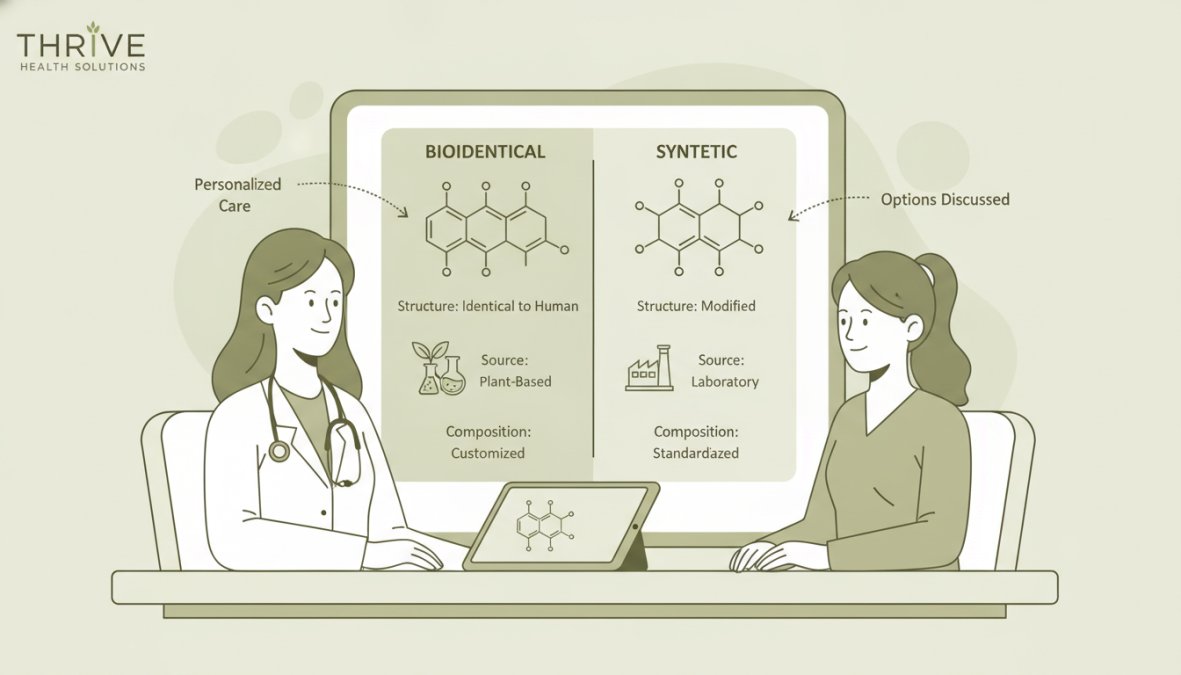
The molecular difference between bioidentical and synthetic hormones determines how they bind to hormone receptors throughout your body. Estradiol, the most common form of estrogen in bioidentical therapy, has a specific three-dimensional shape. Synthetic estrogens like ethinyl estradiol have an additional ethynyl group, which changes how the molecule fits into cellular receptors.
This structural difference affects bioavailability, how much of the hormone reaches your bloodstream in active form. Bioidentical progesterone has lower oral bioavailability than some synthetic progestins, which is why it’s often delivered through patches, creams, or vaginal preparations rather than pills. Synthetic progestins, designed to survive stomach acid better, work well in oral form.
Your liver processes these compounds differently. Synthetic hormones may produce metabolites (breakdown products) that your body doesn’t encounter naturally, which some research suggests could affect clotting factors, blood pressure, or lipid metabolism differently than bioidentical hormones. Transdermal patches and creams bypass first-pass hepatic metabolism, meaning the hormone enters your bloodstream directly rather than passing through your liver first, potentially reducing certain metabolic side effects.
The molecular structure difference means bioidentical hormones follow the same metabolic pathways your body uses naturally, while synthetic hormones may create unique metabolites that your system hasn’t evolved to handle.
FDA Approval Status and Regulatory Landscape
FDA-approved hormone replacement therapy options fall into two categories: branded mass-produced medications and compounded bioidentical hormones.
Branded, mass-produced options are FDA-approved and include both bioidentical and synthetic formulations. Estradiol patches (Vivelle, Climara), estradiol gels (Estrogel), and micronized progesterone (Prometrium) are bioidentical and FDA-approved. Conjugated equine estrogens (Premarin) and synthetic progestins like medroxyprogesterone acetate (Provera) are synthetic and FDA-approved. These products undergo rigorous clinical testing and manufacturing standardization.
Compounded bioidentical hormones occupy a more complex regulatory space. The FDA does not pre-approve compounded medications the way it approves mass-produced drugs. Instead, compounding pharmacies operate under state pharmacy board oversight. This means compounded bioidentical hormones can be customized to your specific dosage needs, but they haven’t undergone the same level of clinical validation as FDA-approved options.
According to research from the American College of Obstetricians and Gynecologists, both approaches can be effective when prescribed by qualified practitioners, but the evidence base is stronger for FDA-approved formulations. Insurance coverage differs significantly, most plans cover FDA-approved hormone therapy, while compounded bioidentical hormones are often out-of-pocket expenses.
Benefits of Bioidentical Hormone Therapy
Patients choosing bioidentical hormone replacement therapy often report several advantages. The molecular match to natural hormones means your body’s receptor sites recognize them as "normal," potentially reducing unexpected immune responses. Because bioidentical hormones follow your body’s natural metabolic pathways, they may carry lower risks for certain side effects like blood clots or stroke compared to some synthetic alternatives.
Customized dosing through compounding pharmacies allows your practitioner to match your exact hormonal needs rather than choosing between standard doses. This precision appeals to patients who’ve had poor responses to standard dosing.
Symptom relief often occurs within 2-4 weeks for hot flashes and night sweats, though full stabilization of mood, sleep, and energy can take 8-12 weeks. Patients report improved quality of life, better cognitive function, and restored sexual health when hormone levels are optimized.
Request baseline hormone testing before starting any hormone therapy. Saliva and serum tests can measure your current estradiol, progesterone, and testosterone levels, giving your practitioner a clear target for dosing.
Risks of Synthetic Hormone Replacement
The Women’s Health Initiative study (2002) raised important safety questions about synthetic hormone therapy, particularly regarding breast cancer and cardiovascular events. That landmark study used conjugated equine estrogens combined with medroxyprogesterone acetate, both synthetic compounds, and showed increased risks for breast cancer, stroke, and blood clots compared to placebo over a 5-year period.
However, the study’s participant population (average age 63, many obese, many with pre-existing hypertension) doesn’t directly apply to all users. Subsequent analysis showed that timing matters: starting hormone therapy closer to menopause onset carries different risk profiles than starting years later. Younger, healthier women may face different risk-benefit ratios.
Synthetic progestins specifically have been associated with increased breast cancer risk in some studies, particularly when combined with estrogen long-term. The synthetic progestin used in the WHI study showed stronger associations with breast cancer than micronized progesterone (which is bioidentical), suggesting that hormone type matters.
Common side effects of synthetic hormones include headaches, nausea, breast tenderness, and mood changes. Blood clots, though rare, occur more frequently with synthetic hormones than with transdermal bioidentical options, because oral administration triggers different clotting factor production in the liver.
How Long Does Hormone Replacement Therapy Take to Work
Timeline for Symptom Relief
Most patients experience initial relief from hot flashes and night sweats within 1-2 weeks of starting hormone replacement therapy, with full symptom resolution typically requiring 4-6 weeks. Mood improvements, anxiety reduction, and cognitive clarity usually appear within 2-4 weeks. Sleep quality often improves within the first month as night sweats diminish.
Sexual function and vaginal health show more gradual improvement. Vaginal dryness and atrophy can take 8-12 weeks to resolve because the vaginal epithelium requires sustained hormone exposure to rebuild tissue thickness. Libido and sexual satisfaction often improve over 3-6 months as overall energy and mood stabilize.
Bone density doesn’t change noticeably within months; you need 1-2 years of consistent hormone therapy to see measurable improvements. However, the protective effect against future bone loss begins immediately.
Factors Affecting Treatment Response
Your starting hormone level significantly affects how quickly you’ll feel better. Patients with severe estrogen deficiency often see faster symptom relief than those with mild deficiency. Delivery method influences response speed, transdermal patches and creams reach stable blood levels within 3-7 days, while oral medications take longer to stabilize.
Your individual metabolism, body weight, and liver function affect how quickly your body processes hormones. Concurrent medications matter too; St. John’s Wort, for example, increases estrogen metabolism, potentially reducing hormone therapy effectiveness. Stress, sleep quality, and overall health habits influence how well your body responds.
If you haven’t seen meaningful improvement after 8 weeks, discuss dosage adjustments with your practitioner rather than abandoning hormone therapy. Many patients need fine-tuning before finding their optimal dose.
Customized Dosing: Compounding Pharmacies vs Mass-Produced Options
Compounding pharmacies create customized hormone preparations based on your specific needs. You might receive estradiol 2.25 mg combined with progesterone 100 mg in a single capsule, rather than choosing from standard combinations. This customization appeals to patients who’ve struggled with standard dosing or who need unusual ratios.
The advantage is precision, your practitioner can adjust doses based on symptom response without waiting for a new prescription from a manufacturer. The disadvantage is standardization. Compounded medications don’t undergo the same quality control as FDA-approved mass-produced options, and potency can vary between batches.
Mass-produced, FDA-approved hormones offer consistency and documented safety and efficacy. The trade-off is less customization. Cost differs significantly, compounded bioidentical hormones typically cost more than generic mass-produced options but may cost less than brand-name synthetic alternatives, depending on your insurance coverage.
| Option | Customization | Cost | Standardization | Insurance Coverage |
|---|---|---|---|---|
| Compounded bioidentical | High | Variable | Lower | Often out-of-pocket |
| FDA-approved bioidentical | Standard doses only | Lower | High | Usually covered |
| FDA-approved synthetic | Standard doses only | Lower | High | Usually covered |
Safety, Clinical Evidence, and Medical Consensus
What Research Shows
The evidence supporting hormone replacement therapy’s safety has evolved significantly since the 2002 Women’s Health Initiative study. More recent research distinguishes between hormone types and delivery methods.
A 2023 analysis found that transdermal estradiol (bioidentical) combined with micronized progesterone (bioidentical) carries lower cardiovascular risk than oral conjugated equine estrogens with synthetic progestins. The delivery method matters, patches bypass first-pass liver metabolism, which appears protective for clotting factors and blood pressure.
Research on breast cancer risk shows nuance. Estrogen-only therapy carries lower breast cancer risk than estrogen-progestin combinations. Among progestins, synthetic progestins show higher breast cancer associations than micronized progesterone. Duration matters too; risk increases with longer therapy duration, but absolute risk remains modest for most women.
Cardiovascular benefits appear when hormone therapy starts near menopause onset rather than years later. Women starting therapy within 5-8 years of their final menstrual period show improved cardiovascular outcomes compared to untreated controls. Bone health benefits are clear and consistent, hormone therapy prevents bone loss and reduces fracture risk, particularly in the hip and spine.
Patient Safety Considerations
Your personal health history determines whether hormone therapy is appropriate for you. Women with a history of hormone-sensitive breast cancer should generally avoid hormone therapy, though some practitioners argue that bioidentical hormones carry lower risk than synthetic options.
Active blood clots, recent stroke, or uncontrolled high blood pressure are contraindications to hormone therapy, particularly oral forms. Transdermal delivery may be safer in these situations, though medical supervision is essential.
Liver disease, uncontrolled diabetes, or active migraine with aura require careful monitoring. Regular monitoring, annual breast exams, mammograms as recommended for your age, and periodic hormone level testing, supports safe long-term therapy.
The decision between bioidentical and synthetic hormones should be individualized based on your symptom severity, health history, treatment goals, and personal preferences. Neither option is universally "better"; the best choice addresses your specific needs with the lowest risk profile for your situation.
Navigating menopause and hormonal imbalance requires personalized medical care that considers your unique health history and goals. At Thrive Health Solutions, we specialize in doctor-supervised bioidentical hormone replacement using innovative delivery methods for precise dosing and optimal absorption. Our team conducts comprehensive hormone testing, creates customized treatment plans, and monitors your progress to ensure you achieve symptom relief safely. Whether bioidentical or synthetic hormones are right for you, our practitioners will help you make an informed decision based on clinical evidence and your individual needs. BOOK NOW to schedule a consultation and begin your journey toward restored hormonal balance and renewed vitality.
External Sources
According to research from the American College of Obstetricians and Gynecologists hormone therapy guidelines, both bioidentical and FDA-approved synthetic hormone therapies can effectively manage menopause symptoms when prescribed appropriately for individual patients.
The Mayo Clinic’s comprehensive review of hormone replacement therapy emphasizes that the timing of therapy initiation and individual health history are critical factors in determining safety and efficacy for menopause management.
A peer-reviewed analysis published in Menopause journal examining transdermal versus oral hormone delivery found that transdermal estradiol combined with micronized progesterone carries lower cardiovascular risk compared to oral conjugated estrogens with synthetic progestins.
Frequently Asked Questions
Are bioidentical hormones safer than synthetic hormones?
Bioidentical hormones have the same molecular structure as hormones your body produces, which some believe may improve tolerability and therapeutic outcomes. However, both bioidentical and synthetic hormone replacement therapy carry similar safety profiles when properly dosed and monitored. The key difference lies in customization potential and individual response rather than inherent safety. Consult a doctor-supervised provider to assess your personal risk-benefit analysis.
What are the main side effects of bioidentical hormone replacement therapy?
Common side effects include breast tenderness, bloating, headaches, mood changes, and spotting. Because bioidentical hormones match your body's natural hormone receptors more closely, some patients report fewer side effects than with synthetic options. However, individual responses vary based on dosing, delivery method, and personal endocrine system sensitivity. Long-term health outcomes require ongoing monitoring by a qualified healthcare provider.
How long does hormone replacement therapy take to work?
Most patients notice initial symptom relief within 2-4 weeks, with full benefits appearing over 3-6 months. Factors affecting timeline include dosage, delivery method (patches, creams, tablets), individual metabolism, and baseline hormone deficiency severity. Some symptoms like hot flashes respond faster than others. Consistent dosing and regular follow-ups with your provider optimize pharmacokinetics and treatment efficacy.
Are bioidentical hormones FDA-approved?
Many bioidentical hormones like estradiol and progesterone are FDA-approved when manufactured by pharmaceutical companies. However, custom-compounded bioidentical hormones from compounding pharmacies are not FDA-approved as finished products, though their individual ingredients are regulated. FDA-approved options provide standardized manufacturing and testing, while compounded options offer personalized dosing. Discuss FDA approval status with your prescribing physician to understand your specific treatment's regulatory standing.
This article was written using GrandRanker