
Table of Contents
- Why Your Skin Changes in Your 40s: Understanding the Science
- Best Anti-Aging Treatments for 40s: Your Treatment Options
- In-Office Anti-Aging Treatments for 40s: Downtime and Results
- Building an Anti-Aging Skincare Routine in Your 40s
- Cost of Anti-Aging Treatments: Budget-Tiered Treatment Plans
- Preventative vs. Corrective Care: Which Strategy Is Right for You?
- Psychological and Lifestyle Factors: The Holistic Approach
- Safety, Contraindications, and Choosing a Provider
Last Updated: July 22, 2026
When you turn 40, your skin tells a different story than it did a decade before. Fine lines deepen, volume diminishes, and sun exposure becomes impossible to ignore. If you’re searching for the best anti aging treatments for 40s, you’re not alone, this is when most people transition from prevention to active intervention. At Thrive Health Solutions, we understand that choosing the right approach requires balancing efficacy, downtime, and realistic expectations.
Research from the American Academy of Dermatology indicates that individuals in their 40s benefit most from a combination approach addressing both dynamic wrinkles (caused by facial movement) and static wrinkles (present at rest).
Why Your Skin Changes in Your 40s: Understanding the Science
Your skin in your 40s is fundamentally different from your 30s, and understanding why matters when choosing treatments.
Collagen Production in Your 40s
Collagen production declines significantly after 40, with you losing approximately 1% of your skin’s collagen per year. This translates to visible thinning, loss of firmness, and deeper wrinkles. Topical creams alone often feel insufficient by 40 because surface-level moisturizers can’t rebuild the dermal architecture that’s deteriorating. You need treatments that stimulate collagen synthesis at deeper levels, which is why procedures like microneedling, laser resurfacing, and injectables become relevant tools.
Starting a prescription retinoid (like tretinoin) in your late 30s can slow collagen loss significantly. If you haven’t already, this is the decade to begin, results compound over time.
How Sun Damage and Lifestyle Accelerate Aging
Cumulative sun exposure is the single largest driver of visible aging in your 40s. UV damage fragments collagen, triggers inflammation, and accelerates elastin breakdown. Lifestyle factors compound this: sleep deprivation, chronic stress, smoking, and poor nutrition all accelerate skin aging.
The good news: many factors are reversible. Starting sun protection now prevents further damage, and lifestyle changes amplify the results of professional treatments.
Skipping sunscreen in your 40s sabotages treatment results. Every professional treatment works harder against ongoing UV damage. SPF 30+ daily is non-negotiable.
Best Anti-Aging Treatments for 40s: Your Treatment Options
The following treatments represent the current gold standard for addressing aging patterns in your 40s.
Neuromodulators: Botox, Dysport, and Xeomin
Neuromodulators work by temporarily relaxing muscles that create dynamic wrinkles, lines that form when you frown, squint, or raise your eyebrows. Botox (onabotulinumtoxinA), Dysport (abobotulinumtoxinA), and Xeomin (incobotulinumtoxinA) are all FDA-approved with similar mechanisms. Botox is most widely used with the longest track record.
Results appear within 3-7 days and continue improving through day 14. Effects last approximately 3-4 months, requiring maintenance treatments 3-4 times per year. Cost typically ranges from $300 to $600 per treatment area.
The primary limitation: neuromodulators only address dynamic wrinkles. Deep static wrinkles, volume loss, or sagging skin require additional treatments. Most practitioners recommend combining them with fillers for comprehensive results.
People with mild to moderate dynamic wrinkles who want preventative treatment or early intervention. Works best on the forehead, between the brows, and around the eyes.
Dermal Fillers for Volume Restoration
Volume loss is the defining characteristic of aging skin in your 40s. Your face loses fat in the cheeks, temples, and under the eyes, creating a hollowed appearance and making nasolabial folds more prominent.
Hyaluronic acid fillers like Juvederm and Restylane are the most popular because they’re reversible, safe, and provide immediate results. Duration depends on placement: cheek fillers typically last 12-18 months, under-eye fillers 9-12 months. Cost ranges from $500 to $1,500 per syringe.
Biostimulatory fillers like Radiesse and Sculptra stimulate your body’s own collagen production rather than simply adding volume. Results take longer (4-6 weeks) but last longer (12-18 months for Radiesse, 2+ years for Sculptra).
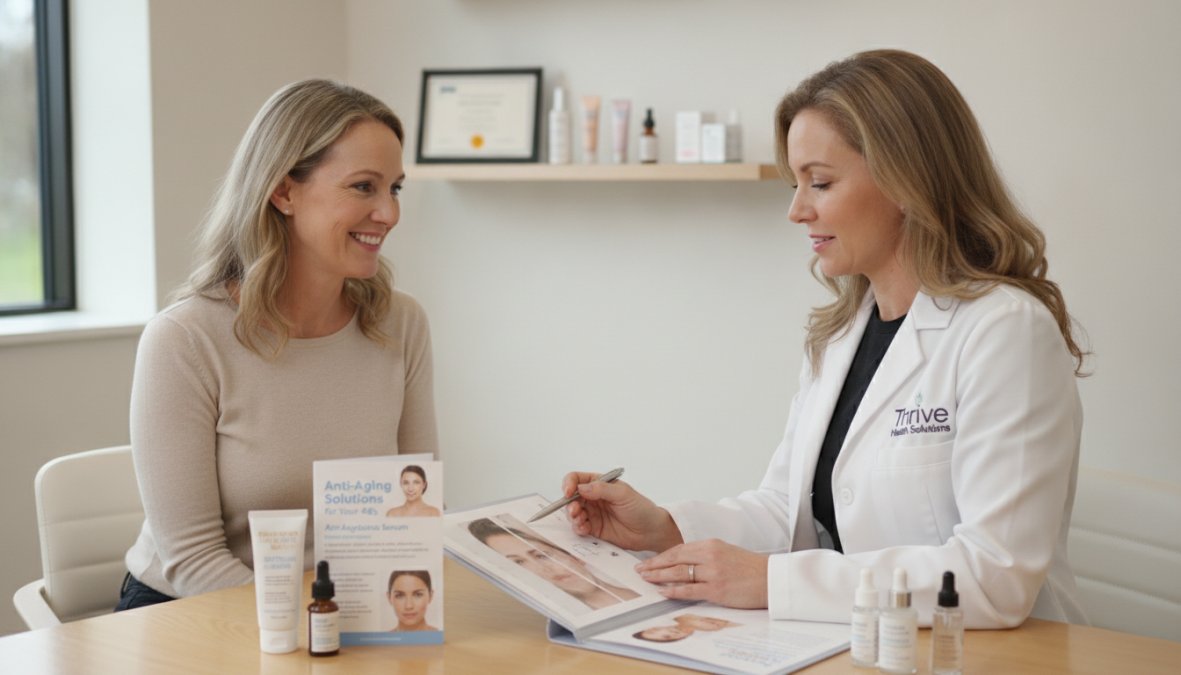
Fillers address static wrinkles and volume loss that neuromodulators can’t touch. Most people in their 40s benefit from combining both for comprehensive results.
Laser Skin Resurfacing and Photorejuvenation
Laser resurfacing removes damaged outer layers of skin and stimulates collagen remodeling in deeper layers, resulting in smoother texture, reduced fine lines, improved tone, and faded sun spots.
Ablative lasers (like CO2) remove the entire epidermis and part of the dermis, creating controlled injury that triggers intense healing and collagen production. Results are significant but downtime is substantial: 7-14 days of visible redness, peeling, and sensitivity.
Fractional lasers create columns of controlled damage while leaving surrounding skin intact, allowing faster healing (3-7 days of visible redness). For someone in their 40s with significant sun damage, a fractional CO2 or erbium laser typically delivers the best balance of results and downtime. Cost ranges from $1,500 to $4,500 per session, with most people needing 1-3 sessions spaced 4-6 weeks apart.
Microneedling and RF Microneedling
Microneedling creates controlled micro-injuries that trigger collagen production. Standard microneedling uses fine needles (0.5-2.5mm depth). RF (radiofrequency) microneedling combines needles with radiofrequency energy, creating more intense collagen stimulation and longer-lasting results.
Standard microneedling costs $200-$700 per session with minimal downtime (24-48 hours of mild redness). RF microneedling costs $800-$2,500 per session but delivers more dramatic results for skin laxity and deeper wrinkles, with slightly longer downtime (3-5 days).
Anyone concerned about skin texture, fine lines, and overall skin quality who wants to avoid more aggressive procedures. RF microneedling is better for deeper wrinkles and skin laxity.
Chemical Peels for Cellular Turnover
Chemical peels accelerate cellular turnover by chemically exfoliating outer skin layers. Light peels remove only the epidermis with minimal downtime. Medium peels (using trichloroacetic acid) penetrate deeper, creating significant results with 5-7 days of visible peeling.
For someone in their 40s, medium-depth peels typically offer the best risk-reward balance, addressing fine lines, sun damage, hyperpigmentation, and rough texture. Cost ranges from $300 to $1,000, with results visible within 1-2 weeks and continuing to improve over 8-12 weeks.
Biostimulatory Treatments and Skin Tightening
Sculptra (poly-L-lactic acid) works over 4-6 weeks as your body gradually produces new collagen. Results become increasingly dramatic over 3-6 months and last 2+ years. Cost is typically $1,500-$3,000 per treatment, with most people needing 3-4 treatments spaced 4-6 weeks apart.
Radiofrequency skin tightening (like Thermage or Morpheus8) uses energy to heat deeper skin layers, triggering collagen contraction and remodeling. Results are gradual (appearing over 2-6 months) but can last 1-2 years. A single treatment is often sufficient. Cost ranges from $2,000-$4,000 per session.
In-Office Anti-Aging Treatments for 40s: Downtime and Results
Understanding downtime is critical when choosing treatments in your 40s.
Treatments with minimal downtime (0-2 days): neuromodulators, light chemical peels, non-ablative lasers, standard microneedling.
Treatments with moderate downtime (3-7 days): medium chemical peels, RF microneedling, fractional laser resurfacing, dermal fillers.
Treatments with significant downtime (7-14+ days): ablative laser resurfacing, deep chemical peels.
Most people in their 40s benefit from combining multiple treatments with staggered timing. For example: neuromodulators every 3 months (no downtime), RF microneedling every 6 months (3-5 days downtime), and maintenance chemical peels 2-3 times per year (5-7 days downtime).
| Treatment | Downtime | Duration | Frequency | Best For |
|---|---|---|---|---|
| Botox/Dysport/Xeomin | 0-1 days | 3-4 months | Every 3-4 months | Dynamic wrinkles |
| Dermal Fillers | 0-2 days | 9-18 months | Every 9-18 months | Volume loss |
| Chemical Peels (medium) | 5-7 days | 8-12 weeks | Every 4-6 weeks (series) | Texture, sun damage |
| Microneedling (standard) | 1-2 days | 3-6 months | Every 4-6 weeks | Texture, fine lines |
| RF Microneedling | 3-5 days | 6-12 months | Every 6-12 weeks | Deep wrinkles, laxity |
| Laser Resurfacing (fractional) | 5-7 days | 3-6 months | 1-3 sessions | Sun damage, wrinkles |
| Biostimulatory Fillers | 0-2 days | 18-24+ months | Every 18-24 months | Volume, collagen |
Building an Anti-Aging Skincare Routine in Your 40s
Professional treatments are most effective when combined with a solid at-home skincare routine. In your 40s, your routine should focus on stimulating collagen, protecting against further damage, and maintaining skin barrier health.
Prescription Retinoids and Preventative Care
Retinoids (vitamin A derivatives) are the single most evidence-backed anti-aging ingredient available. Tretinoin (Retin-A) is the gold standard, a prescription-strength retinoid significantly more potent than over-the-counter retinols. It increases collagen production, reduces fine lines and wrinkles, and fades hyperpigmentation.
Tretinoin causes initial irritation, dryness, peeling, and sensitivity during the "retinization period," typically lasting 4-12 weeks. Starting low and increasing gradually minimizes this. Used consistently, tretinoin produces visible results within 8-12 weeks and continues improving over 6+ months. Cost is typically $15-$40 per month through generic prescriptions.
Start tretinoin at 0.025% and use it only 2-3 times per week initially. Gradually increase frequency over 8-12 weeks to minimize irritation.
Antioxidants, Sunscreen, and Daily Protection
Antioxidants like vitamin C (L-ascorbic acid), vitamin E, and ferulic acid neutralize free radicals created by UV exposure. A high-quality antioxidant serum applied in the morning provides additional protection beyond sunscreen.
Sunscreen is non-negotiable in your 40s. Daily UV exposure accelerates aging and undoes the benefits of professional treatments. Broad-spectrum SPF 30+ is the minimum; SPF 50+ is preferable. Reapply every 2 hours if outdoors.
Moisturizers containing hyaluronic acid support skin barrier function and plump fine lines temporarily, particularly important if you’re using tretinoin or other drying treatments.
Cost of Anti-Aging Treatments: Budget-Tiered Treatment Plans
Building a realistic budget requires understanding what each tier offers.
Affordable At-Home Options
The most budget-friendly approach focuses on prescription retinoids and sunscreen with minimal professional treatments.
Monthly cost: $50-$100 (tretinoin $20-$40, sunscreen $20-$30, moisturizer/cleanser $15-$30)
This approach takes 3-6 months to show visible results but is highly effective long-term. Best for: people with mild aging signs or those with limited budgets.
Mid-Range Medical-Grade Treatments
This tier combines at-home skincare with occasional professional treatments, typically 2-4 times per year.
Monthly cost: $200-$400 (at-home skincare $75, professional treatments averaged across 12 months)
A realistic plan might include: monthly chemical peels ($300-$400 each, 3-4 per year), quarterly neuromodulator treatments ($300-$600 each), and basic at-home skincare. This addresses dynamic wrinkles, texture, sun damage, and maintains collagen stimulation.
Premium In-Office Procedures and Maintenance
This tier uses more aggressive professional treatments with longer-lasting results, reducing maintenance frequency.
Monthly cost: $400-$800+ (professional treatments averaged across 12 months)
A comprehensive plan might include: RF microneedling every 6 months ($1,500-$2,500 each), biostimulatory fillers once per year ($2,500-$4,000), quarterly neuromodulators ($300-$600 each), and annual laser resurfacing ($2,000-$4,000).
The most effective approach isn’t necessarily the most expensive. A consistent mid-range plan often produces better results than sporadic premium treatments because consistency matters more than intensity.
Preventative vs. Corrective Care: Which Strategy Is Right for You?
By your 40s, you have existing damage requiring correction. Simultaneously, preventing further damage is critical to avoid accelerating aging over the next decade.
A realistic strategy for your 40s: use preventative measures daily (sunscreen, retinoids, antioxidants), address existing damage with 1-2 corrective treatments per year, and reassess annually as damage improves, shifting toward maintenance and prevention.
Psychological and Lifestyle Factors: The Holistic Approach
Anti-aging treatments produce better results when combined with lifestyle factors supporting skin health.
Sleep quality directly impacts skin aging. During sleep, your body increases blood flow to skin and rebuilds collagen. Chronic sleep deprivation accelerates aging visibly. Aim for 7-9 hours nightly.
Stress increases cortisol, which breaks down collagen and triggers inflammation. Stress management through exercise, meditation, or therapy is visible anti-aging medicine.
Nutrition matters. Antioxidant-rich foods (berries, leafy greens, fatty fish) support skin health. Exercise improves circulation and supports collagen production. Smoking accelerates aging dramatically, quitting is the single most impactful anti-aging decision you can make.
Safety, Contraindications, and Choosing a Provider
All treatments carry potential risks. Understanding contraindications and choosing a qualified provider minimizes these risks significantly.
Neuromodulators are contraindicated if you’re pregnant, breastfeeding, have neuromuscular disorders, or are allergic to any ingredient. Dermal fillers carry risks of infection, allergic reaction, vascular occlusion, and overcorrection. Laser treatments can cause burns, scarring, or pigmentation changes if performed incorrectly. Chemical peels risk burns, scarring, and post-inflammatory hyperpigmentation.
Choosing a provider is the single most important safety decision. Qualifications matter:
- Board-certified dermatologists or plastic surgeons have extensive training in skin anatomy and complications
- Licensed aestheticians can perform certain treatments but lack medical training to manage complications
- Nurse injectors (RNs or LPNs) can administer injectables under physician supervision
- Unlicensed providers are high-risk, avoid them entirely
Ask about your provider’s experience, training, before-and-after photos, and complication rates. Reputable providers discuss realistic expectations and potential complications openly.
Choosing the best anti aging treatments for 40s requires balancing efficacy, downtime, cost, and realistic expectations. The most effective approach combines professional treatments addressing specific aging mechanisms with consistent at-home skincare and lifestyle factors supporting skin health. Thrive Health Solutions offers doctor-supervised, personalized anti-aging strategies including neuromodulators, dermal fillers, biostimulatory treatments, and medical-grade skincare protocols tailored to your specific aging patterns and goals. Schedule a consultation to design a treatment plan that delivers the results you want without overwhelming your schedule or budget.
Frequently Asked Questions
What are the best anti-aging treatments for people in their 40s?
The best anti-aging treatments for your 40s depend on your specific concerns and skin type. Common options include neuromodulators like Botox for fine lines, dermal fillers for volume loss, laser skin resurfacing for sun damage, and microneedling for collagen induction. Many people combine in-office procedures with a strong at-home skincare routine using retinol and sunscreen for optimal results. A dermatologist can assess your skin and recommend a personalized plan.
How does collagen production in your 40s affect anti-aging treatment choices?
Collagen production naturally declines in your 40s, leading to loss of skin elasticity and deeper wrinkles. This is why treatments that stimulate collagen, like microneedling, RF microneedling, and laser resurfacing, become increasingly important at this age. Biostimulatory fillers and prescription retinoids also boost collagen and elastin production. Understanding your collagen loss helps guide whether you need volume-restoring fillers, collagen-stimulating procedures, or a combination approach.
What's the difference between preventative and corrective anti-aging treatments?
Preventative treatments focus on slowing aging through daily skincare (retinol, sunscreen, antioxidants) and maintenance procedures to stop fine lines before they deepen. Corrective treatments address existing damage like deep wrinkles, sun spots, and significant volume loss through more intensive procedures like laser resurfacing or dermal fillers. Most people in their 40s benefit from both: a solid preventative routine plus targeted corrective treatments for specific concerns.
How much downtime should I expect from in-office anti-aging treatments?
Downtime varies widely. Botox and dermal fillers have minimal downtime (1-2 days of possible bruising). Microneedling typically causes 1-3 days of redness. Chemical peels range from a few days (light) to 2+ weeks (deep). Laser resurfacing can require 1-2 weeks for ablative treatments. RF microneedling falls in the middle with 3-5 days of recovery. Your provider can discuss realistic downtime for your specific procedure and help you plan accordingly.
What should I look for in a provider for anti-aging treatments?
Choose a board-certified dermatologist or plastic surgeon with specific experience in anti-aging procedures. Verify they use FDA-approved products and maintain proper safety protocols. Ask about their approach to natural-looking results and request before-and-after photos. Ensure they conduct a thorough consultation to understand your goals and discuss contraindications. A reputable provider will also be transparent about costs, maintenance schedules, and realistic expectations for your specific concerns.
This article was written using GrandRanker