
Table of Contents
- Hormonal Imbalance Weight Gain Symptoms: Recognizing the Signs
- Best Exercises for Menopause Weight Gain
- Menopause Diet Plan for Weight Loss
- The Role of Sleep Hygiene and Stress Management
- Intermittent Fasting and Supplement Safety: What to Know
- Post-Menopause vs. Perimenopause: How Weight Management Differs
- When to Seek Professional Support for Menopause Weight Gain
- Frequently Asked Questions
Last Updated: September 19, 2026
Hormonal Imbalance Weight Gain Symptoms: Recognizing the Signs
Weight gain during menopause is not a failure of willpower. It is largely a hormonal event, and the signs follow a pattern.
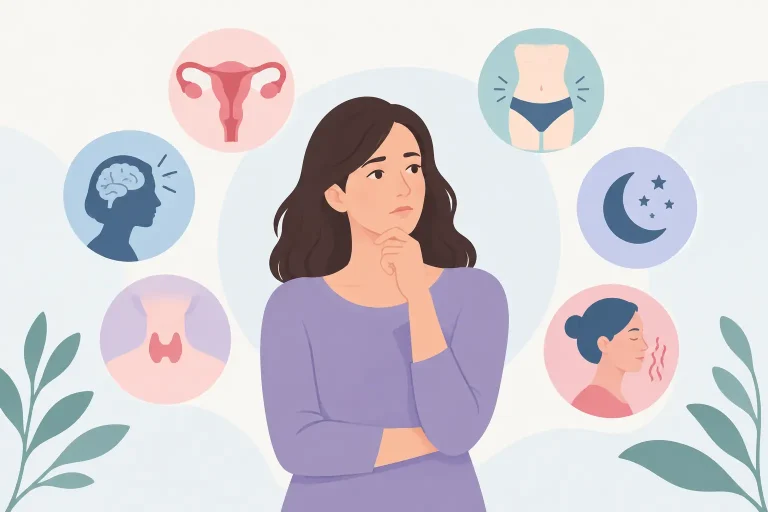
Hormonal imbalance weight gain symptoms to watch for:
- Extra fat around the belly, even when your weight barely moves
- Loss of muscle tone despite the same routine
- Fatigue that sleep does not fix
- Mood swings, irritability, or low motivation
- Cravings for sugar and refined carbs
- Poor sleep, night sweats, or waking at 3 a.m.
If your waist is growing while your scale stays flat, you are likely losing lean muscle and gaining visceral fat at the same time. That swap matters more than the number on the scale.
Best Exercises for Menopause Weight Gain
The best exercises for menopause weight gain combine strength training with regular aerobic activity. Muscle protects your metabolism; cardio protects your heart. You need both, and the order matters less than the consistency.

Strength Training to Preserve Lean Muscle Mass
Strength training is the part most women skip, and it is the part that changes body composition. Two to three sessions per week is enough to start.
- Squats, lunges, and step-ups for the legs
- Push-ups and rows for the upper body
- Deadlifts or hip hinges for the back and glutes
- Carry variations for grip and core
Menopause Diet Plan for Weight Loss
A menopause diet plan for weight loss is not a crash diet. It is a protein-forward, fiber-rich way of eating you can hold for years. The Physicians Committee for Responsible Medicine notes that plant-based eating patterns help maintain a healthy body weight through the menopausal transition.
Protein, Fiber, and Whole Grains: Building a Nutrient-Dense Plate
Build each plate around three things:
| Component | Target Per Meal | Examples |
|---|---|---|
| Protein | 25-35 g | Chicken, fish, tofu, Greek yogurt, eggs |
| Fiber | 8-10 g | Beans, lentils, berries, broccoli |
| Whole grains | 1 serving | Oats, quinoa, brown rice, whole wheat |
Protein intake matters more now than it did at 30. The Menopause Society guidance on muscle preservation stresses protein plus weight-bearing exercise to counter age-related muscle loss, called sarcopenia.
Cutting protein to cut calories is the most common mistake we see. You lose weight, but much of it comes from muscle, and your metabolic rate drops with it.
The Role of Sleep Hygiene and Stress Management
Poor sleep and chronic stress raise cortisol, and elevated cortisol pushes fat storage toward the belly. Fixing sleep is not a soft recommendation. It is a weight-management strategy.
Sleep hygiene basics that actually move the needle:
- Same wake time every day, weekends included
- No screens for 30 minutes before bed
- Cool, dark room
- No caffeine after early afternoon
- Alcohol limited, especially close to bedtime
Intermittent Fasting and Supplement Safety: What to Know
Most ranking articles on menopause weight gain either ignore intermittent fasting or dismiss it in one line. That is a gap, because time-restricted eating is one of the most common things women in midlife try on their own, and the results are genuinely mixed.
What Intermittent Fasting Actually Does
Intermittent fasting does not change your hormones. It changes your eating window, which usually reduces total intake without deliberate calorie counting. The most common protocols are:
- 16:8, eat within an 8-hour window, fast 16 hours (often 8 p.m. to noon)
- 14:10, a gentler starting point, especially if you wake early or train in the morning
- 5:2, five normal days, two low-calorie days per week
Who Should Not Fast
Skip intermittent fasting, or get clearance first, if you:
- Take medication that must be taken with food (metformin, thyroid medication, some antidepressants)
- Have type 1 or type 2 diabetes, or a history of hypoglycemia
- Have a history of disordered eating or restrictive dieting
- Are pregnant or breastfeeding
- Are under significant chronic stress or sleeping poorly
The last point matters more than most lists admit. If your sleep is already broken, adding a fasting window usually makes it worse, not better.
Supplement Safety: What the Label Does Not Tell You
A few supplements women ask about most often:
- Magnesium, reasonable evidence for sleep and muscle function; not a weight-loss supplement, but poor sleep undermines every other effort
- Black cohosh, used for hot flashes; evidence is mixed, and rare liver concerns have been reported, so it warrants a conversation with a clinician
- Vitamin D and calcium, relevant to bone health after menopause, not to fat loss directly
- Protein powder, not a supplement in the marketing sense, but the most useful “product” most women can add
“Hormone-balancing” blends are the highest-risk category. They often stack multiple botanicals at doses too low to help and too poorly studied to reassure. If a label does not list every ingredient and amount, treat that as a red flag.
Before starting any supplement, bring the actual bottle to your clinician or pharmacist. Interactions with thyroid medication, blood thinners, and antidepressants are common and easy to miss.
The honest summary: intermittent fasting is a tool, not a treatment, and supplements are rarely the lever that moves menopausal weight. Sleep, protein, and strength training are.
Post-Menopause vs. Perimenopause: How Weight Management Differs
Most articles on menopause weight gain treat “menopause” as one event. It is not. Perimenopause and post-menopause have different hormonal profiles, different symptom patterns, and, importantly, different levers that actually work. Treating them the same is why so many women follow good advice and see no results. Tailoring your approach to these specific hormonal shifts allows for a more effective integration of natural menopause remedies that support metabolic health throughout each distinct phase.
Perimenopause: The Unpredictable Phase
Perimenopause is the transition, and it can last four to ten years. Estrogen does not simply decline, it swings. Some months it spikes higher than it ever did in your 30s; other months it drops sharply. Progesterone usually falls first.
What that means in practice:
- Weight gain is erratic. You may gain two pounds in a week with no change in habits, then hold steady for a month.
- Sleep is the first casualty. Night sweats, waking at 3 a.m., and shortened sleep drive cravings the next day.
- Cycle length changes. Heavier, lighter, closer together, or further apart, all normal.
- Mood swings track the hormonal swings, not your circumstances.
Post-Menopause: The New Baseline
Post-menopause is defined as twelve consecutive months without a period. Estrogen stays low and stable. The swings stop, but the new baseline has its own consequences:
- Fat distribution shifts permanently toward the abdomen. Visceral fat increases even when total weight is stable.
- Muscle loss accelerates. Without resistance training, women lose roughly 3-8% of muscle mass per decade after 30, and the rate climbs after menopause.
- Bone density declines faster. Estrogen protected bone; without it, the drop is steeper.
- Metabolic rate drifts down as lean mass falls, often 100-200 fewer calories burned per day than a decade earlier.
What Changes in the Plan
| Priority | Perimenopause | Post-Menopause |
|---|---|---|
| Sleep support | Highest priority | Still important, often easier |
| Strength training | 2x per week | 2-3x per week, non-negotiable |
| Protein target | 25-35 g per meal | Same, often harder to hit |
| Bone health | Monitor | Vitamin D, calcium, weight-bearing work |
| Calorie strategy | Gentle deficit, flexible | Slightly larger deficit tolerated |
| Stress management | High priority | Moderate priority |
The single biggest mistake is applying post-menopausal advice, strict deficits, rigid schedules, during perimenopause, when the hormonal swings make consistency nearly impossible. Match the strategy to the phase.
If you are unsure which phase you are in, a clinician can confirm it with a simple history and, when needed, lab work. The distinction is not academic, it changes what you should do first.
When to Seek Professional Support for Menopause Weight Gain
Seek professional support when lifestyle changes have not moved the needle after three to six months. That is not a failure. It is information.
Women in midlife who have tried diet and exercise alone and want lab-based answers instead of another generic plan.
Frequently Asked Questions
Is it possible to reverse menopause weight gain?
Yes, it is possible to reverse or manage menopause weight gain with consistent lifestyle changes. The Mayo Clinic (2024) states there is no magic formula, but adhering to a nutrient-dense diet, regular aerobic activity, and strength training can help. Aim for at least 150 minutes of moderate aerobic activity weekly, as recommended by The Ohio State University Wexner Medical Center (2024). A caloric deficit and increased protein intake support fat loss while preserving lean muscle mass. Consulting a healthcare provider for personalized guidance is advised.
What causes weight gain after menopause?
Weight gain after menopause is primarily driven by low circulating estrogen levels due to progressive loss of ovarian function, often exacerbated by excessive caloric intake (National Institutes of Health, 2019). This hormonal shift leads to increased visceral fat and a slower metabolic rate. Additionally, age-related loss of lean muscle mass (sarcopenia) reduces daily calorie burn. Lifestyle factors like reduced physical activity and poor sleep hygiene further contribute. Understanding these causes helps tailor effective weight management strategies.
How to control menopause hunger?
Controlling menopause hunger involves stabilizing blood sugar and hormones. Focus on a menopause diet plan for weight loss that includes fiber-rich foods, whole grains, and adequate protein intake to promote satiety. Avoid refined carbohydrates that spike insulin. Managing stress and cortisol levels through techniques like mindfulness or yoga can also reduce emotional eating. The Physicians Committee for Responsible Medicine (2024) highlights plant-based diets for weight maintenance. If hunger persists, consult a professional for personalized advice.
Does hormone replacement therapy help with weight loss?
Hormone replacement therapy (HRT) can help with weight management by addressing estrogen deficiency, which may reduce visceral fat accumulation and improve body composition. However, HRT is not a direct weight loss solution; it works best alongside lifestyle interventions. The Menopause Society (2024) emphasizes that protein intake and weight-bearing exercises are crucial to counteract muscle loss. Discuss the risks and benefits of HRT with a qualified healthcare provider to determine if it is appropriate for you.
Menopause weight gain responds to consistent effort, but only when the plan matches your hormones, your sleep, and your muscle mass. Thrive Health Solutions builds personalized, doctor-supervised plans that address all three, with bioidentical hormone replacement, medical weight loss, and peptide therapy tailored to your labs. Book a consultation and get a plan built around your body, not a template.