
Table of Contents
- Understanding Hormonal Changes After 40
- Signs of Hormonal Imbalance in Women Over 40
- Best Foods for Hormone Balance After 40
- Natural Methods to Balance Hormones After 40
- Tracking Progress: How Long to See Results From Hormone Balancing
- Natural Methods vs. Hormone Replacement Therapy
- Environmental Toxins and Endocrine Disruptors
- Creating Your Holistic Hormone-Balancing Plan
Balance Hormones Naturally After 40: A Complete Guide
Last Updated: July 13, 2026
Learning to balance hormones naturally after 40 requires understanding that your body is undergoing a profound metabolic shift. The endocrine system doesn’t decline uniformly; instead, it recalibrates, with some hormones dropping sharply while others fluctuate unpredictably. This guide provides actionable strategies to support your hormonal health during this critical life stage.
Understanding Hormonal Changes After 40
Your hormones shift in complex, interconnected ways after 40. Estrogen and progesterone begin their descent toward menopause, but this transition rarely follows a linear path. Fluctuations can create confusing, unpredictable symptoms. Understanding this reality is the first step toward effective intervention.
Why Hormones Shift in Midlife
The transition into perimenopause typically begins in the mid-40s, though timing varies by genetics, lifestyle, and overall health. During this phase, your ovaries gradually produce less estrogen and progesterone. Cortisol, your stress hormone, often rises to compensate, creating cascading effects on sleep, metabolism, and mood.
According to Mayo Clinic’s perimenopause overview, this transition can last 4-10 years. Symptoms depend less on absolute hormone levels and more on the rate of change. A woman whose estrogen drops gradually may experience fewer symptoms than one whose levels plummet rapidly, even if final levels are identical.
Common drivers of accelerated hormonal shifts include chronic stress, poor sleep, insulin resistance, and inflammation. These aren’t separate problems, they’re interconnected. High cortisol suppresses progesterone production. Poor sleep disrupts hormonal signaling that regulates estrogen metabolism. Insulin resistance increases inflammation, which further disrupts endocrine function.
The Endocrine System and Aging
Your endocrine system is a communication network. The hypothalamus, pituitary, ovaries, thyroid, and adrenal glands work in concert. When one system falters, others compensate, sometimes effectively, sometimes not.
After 40, thyroid function often declines subtly. Many women develop subclinical hypothyroidism that doesn’t register as "abnormal" on standard tests but creates real symptoms like fatigue, weight gain, and sluggish metabolism. The thyroid directly influences estrogen metabolism in the gut, creating a bidirectional relationship.
The gut microbiome also plays a critical role. Your gut bacteria produce enzymes that help recycle and reabsorb estrogen through the estrobolome. After 40, many women experience shifts in gut bacterial composition, reducing estrogen recycling efficiency and accelerating hormonal decline.
Signs of Hormonal Imbalance in Women Over 40
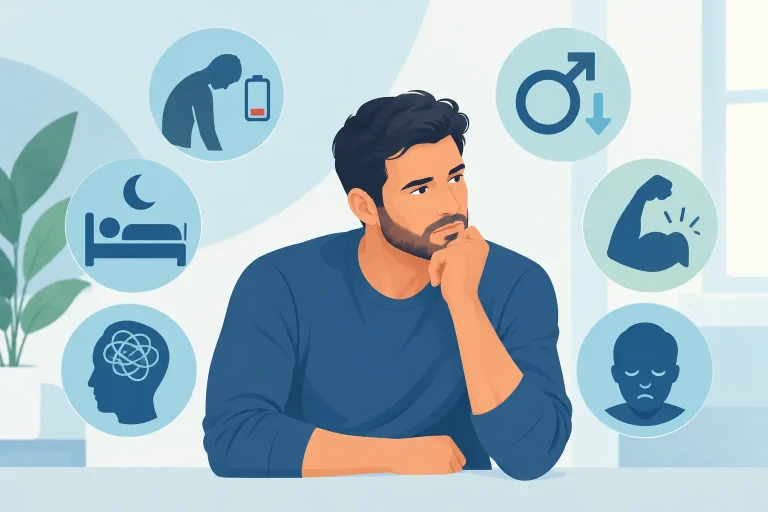
Recognizing hormonal imbalance early allows intervention before symptoms compound. Hot flashes and night sweats are visible but often appear last. Earlier signs include irregular menstrual cycles (heavier, lighter, closer, or further apart) and sleep disruption, particularly waking at 3 AM without obvious reason.
Weight gain, particularly around the abdomen, signals metabolic changes driven by hormonal shifts and insulin resistance. Many women report gaining 10-15 pounds despite unchanged eating and exercise habits.
Mood changes deserve serious attention. Declining progesterone, which has calming properties, can trigger anxiety, irritability, or depression. Brain fog, reduced libido, vaginal dryness, and joint or muscle aches frequently improve dramatically when hormonal balance is restored.
Best Foods for Hormone Balance After 40
Food directly influences hormonal health daily. The best foods for hormone balance after 40 support stable blood sugar, reduce inflammation, provide phytoestrogens, and feed beneficial gut bacteria.

Protein, Healthy Fats, and Fiber
Adequate protein becomes increasingly important after 40. Your body’s ability to synthesize muscle from amino acids declines, making protein intake critical for maintaining lean mass and metabolic rate. Aim for 25-30 grams of protein per meal, distributed throughout the day.
Protein stabilizes blood sugar, which directly impacts cortisol and insulin. Research from Harvard T.H. Chan School of Public Health’s nutrition studies shows that adequate protein intake improves satiety and metabolic health in midlife women.
Healthy fats, particularly omega-3 fatty acids and monounsaturated fats, reduce systemic inflammation. Fatty fish like salmon and sardines provide EPA and DHA, which support brain health and mood regulation. Olive oil, avocados, nuts, and seeds provide sustained energy without blood sugar spikes.
Fiber intake is critical for estrogen metabolism. Soluble fiber feeds beneficial gut bacteria that produce short-chain fatty acids, strengthening your gut barrier and reducing inflammation. Aim for 25-35 grams of fiber daily, increasing gradually. Fiber also slows glucose absorption, stabilizing insulin and cortisol.
Pair protein and fat at every meal with fiber-rich vegetables. This combination slows digestion and stabilizes blood sugar for 3-4 hours. A typical balanced meal: 4-6 oz salmon, 1 cup roasted broccoli, ½ avocado, small salad with olive oil dressing.
Cruciferous Vegetables and Estrogen Metabolism
Cruciferous vegetables, broccoli, Brussels sprouts, cabbage, cauliflower, kale, contain sulforaphane and indole-3-carbinol (I3C), compounds that support estrogen metabolism in the liver. These vegetables feed the exact bacteria that help recycle estrogen, creating a synergistic effect.
Cook cruciferous vegetables lightly or raw to preserve sulforaphane, which is heat-sensitive. Include at least one serving daily. Raw broccoli sprouts are particularly potent, containing 50 times more sulforaphane than mature broccoli.
Berries, particularly blueberries and raspberries, provide anthocyanins and resveratrol, which reduce inflammation and support mitochondrial function. Dark leafy greens provide magnesium, a mineral depleted by stress and essential for progesterone synthesis and sleep quality.
| Food Category | Best Choices | Key Benefit | Serving Size |
|---|---|---|---|
| Protein | Salmon, sardines, eggs, Greek yogurt | Amino acids + omega-3s | 4-6 oz per meal |
| Healthy Fats | Olive oil, avocado, nuts, seeds | Anti-inflammatory | 1-2 tbsp or 1/4 avocado |
| Cruciferous | Broccoli, Brussels sprouts, cabbage | Estrogen metabolism | 1 cup daily |
| Berries | Blueberries, raspberries, blackberries | Antioxidants + mitochondrial support | 1/2 cup daily |
| Leafy Greens | Spinach, kale, collards | Magnesium + nutrients | 2-3 cups daily |
Natural Methods to Balance Hormones After 40
Lifestyle modifications form the foundation of hormonal health. Supplements and medical interventions amplify what a solid lifestyle foundation creates.
Strength Training and Physical Activity
Strength training becomes non-negotiable after 40. Resistance exercise preserves muscle mass, improves insulin sensitivity, and directly stimulates progesterone production. Unlike steady-state cardio, which can elevate cortisol if overdone, strength training builds metabolic resilience.
Prioritize resistance work 3-4 times weekly, targeting major muscle groups with progressive resistance. Muscle contractions improve glucose uptake without requiring insulin, reducing insulin resistance. Stronger muscles improve your metabolic rate, counteracting the metabolic decline that accelerates after 40.
Low-intensity movement, walking, yoga, swimming, complements resistance training. Aim for 150 minutes weekly of moderate activity plus 2-3 resistance sessions.
Excessive endurance exercise can suppress progesterone and elevate cortisol chronically. If experiencing hormonal symptoms while exercising intensely more than 5 days weekly, reduce volume before adding supplements.
Sleep Quality and Circadian Rhythm
Sleep quality directly determines hormonal health. Progesterone, melatonin, and growth hormone are synthesized during sleep. Poor sleep elevates cortisol, impairs glucose metabolism, and accelerates hormonal decline.
After 40, sleep disruption often worsens because declining estrogen reduces melatonin sensitivity. Lower progesterone, which has sedating properties, makes sleep maintenance difficult.
Optimize sleep through: consistent sleep and wake times, bright light exposure within 30 minutes of waking, avoiding screens 60 minutes before bed, keeping your bedroom cool (65-68°F), dark, and quiet. Magnesium glycinate taken 1-2 hours before bed supports sleep quality.
Stress Management and Cortisol Control
Chronic stress is perhaps the single most significant driver of hormonal imbalance after 40. Elevated cortisol suppresses progesterone production, impairs thyroid function, and promotes insulin resistance.
Cortisol follows a natural rhythm: high in the morning, declining throughout the day, lowest at night. Chronic stress flattens this rhythm, keeping cortisol elevated throughout the day and night.
Effective stress management requires consistency. A 10-minute daily meditation practice outperforms occasional weekend retreats. Diaphragmatic breathing, slow, deep breathing (4-second inhale, 6-second exhale), activates the vagus nerve, immediately shifting your nervous system from sympathetic to parasympathetic. Practicing this 5-10 minutes daily measurably reduces cortisol.
Equally important is identifying and reducing chronic stressors through boundary-setting, delegation, or professional support.
Gut Health and the Microbiome
Your gut microbiome directly influences hormone metabolism through the estrobolome. A healthy microbiome improves estrogen recycling, reducing the rate at which estrogen is lost.
Support gut health through fermented foods (sauerkraut, kimchi, miso, tempeh), prebiotic fiber (onions, garlic, asparagus, bananas), and diverse plant foods. Aim for 30+ different plant foods weekly.
Probiotic supplements can help, though food sources are generally superior. If using probiotics, choose multi-strain formulations and use consistently for 8-12 weeks. Discontinue if they worsen symptoms.
Equally important is healing the gut barrier itself. Chronic inflammation damages the intestinal lining, allowing bacterial lipopolysaccharides to enter the bloodstream. Bone broth, L-glutamine, and zinc carnosine support barrier integrity.
Tracking Progress: How Long to See Results From Hormone Balancing
Sleep quality often improves within 1-2 weeks of consistent sleep hygiene and stress management. Weight and energy changes typically appear within 4-6 weeks. Menstrual cycle regularity, hot flash frequency, and mood stability often require 8-12 weeks of consistent intervention.
The most important tracking method is symptom logging. Keep a simple daily log: sleep quality (1-10), energy level (1-10), mood (1-10), hot flashes (yes/no, frequency), and other relevant symptoms. After 4 weeks, patterns emerge. After 8 weeks, clear trends appear.
The most reliable predictor of success is consistency over 8-12 weeks, not perfection. A woman who implements 70% of recommendations consistently outperforms one who implements 100% sporadically.
Natural Methods vs. Hormone Replacement Therapy
Natural methods address root causes and build systemic resilience. They improve metabolic health, reduce inflammation, and support your body’s own hormone production. These changes take 8-12 weeks to show results but create lasting improvements.
Hormone Replacement Therapy (HRT) provides rapid symptom relief. Bioidentical hormones directly address the hormonal deficit driving symptoms. Many women experience relief from hot flashes, sleep disruption, and mood changes within days to weeks.
The evidence-based approach is "natural AND medical when needed." A woman with severe hot flashes might benefit from bioidentical estrogen while simultaneously implementing lifestyle changes. As lifestyle improvements accumulate, HRT dosage can often be reduced.
When to Consider Medical Interventions
Consider HRT when symptoms significantly impair quality of life despite 8-12 weeks of consistent lifestyle changes, sleep disruption is severe, mood changes are significant, vaginal atrophy causes pain or dysfunction, or you have personal or family history of early menopause (before age 45).
Bioidentical hormones have the same molecular structure as hormones your body produces, whereas synthetic versions have different structures. Both are evidence-based treatments. The key is informed choice based on your specific situation, symptom severity, and personal preferences.
Diagnostic Testing and Preventative Screenings
Before implementing any hormone-balancing protocol, understand your baseline. Relevant testing includes fasting blood glucose and insulin (revealing insulin resistance), thyroid panel (TSH, free T3, free T4, thyroid antibodies), estradiol, progesterone, testosterone (measured on day 21 of cycle), cortisol (4-point salivary), and inflammatory markers (CRP and homocysteine).
Testing is most useful when repeated after 8-12 weeks of intervention. Preventative screening after 40 includes bone density (DEXA scan), mammography, and cervical cancer screening.
Environmental Toxins and Endocrine Disruptors
Endocrine disruptors are chemicals that mimic or block hormone signaling. Common disruptors include BPA and phthalates in plastics, pesticides on produce, heavy metals in contaminated water, flame retardants in furniture, and parabens in cosmetics.
Reduce exposure by avoiding heating food in plastic containers, choosing organic produce for the "Dirty Dozen," filtering drinking water, and selecting paraben-free personal care products. Research from NIH’s National Institute of Environmental Health Sciences documents how endocrine disruptors affect hormone metabolism.
Creating Your Holistic Hormone-Balancing Plan
Implement strategies using a phased approach over 12 weeks to prevent overwhelm.
Weeks 1-2: Foundation
Establish consistent sleep schedule, add one serving of cruciferous vegetables daily, start 5-10 minutes daily diaphragmatic breathing, reduce plastic use.
Weeks 3-4: Nutrition
Ensure 25-30g protein per meal, add healthy fats to each meal, increase fiber gradually to 25-35g daily, reduce processed foods.
Weeks 5-6: Movement
Add 2 resistance training sessions weekly, increase daily movement, track energy and mood daily.
Weeks 7-8: Stress and Gut
Expand breathing practice or add meditation, add fermented foods or probiotic supplement, address major stressors, consider magnesium supplementation.
Weeks 9-12: Assessment and Adjustment
Review symptom log, consider lab testing, adjust interventions based on results, plan next phase.
Hormonal imbalance after 40 doesn’t have to be permanent. The strategies outlined here address root causes, inflammation, stress, metabolic dysfunction, and nutritional gaps, that drive hormonal decline. Thrive Health Solutions offers comprehensive hormone evaluation, personalized protocols combining natural methods with bioidentical hormone replacement when appropriate, and ongoing monitoring to ensure your approach is working. BOOK NOW to schedule your hormone consultation and begin your transformation.
Frequently Asked Questions
What are the signs of hormonal imbalance in women over 40?
Common signs include irregular periods, hot flashes, night sweats, mood swings, fatigue, weight gain (especially around the midsection), brain fog, and changes in libido. Sleep disturbances, joint pain, and dry skin are also frequent indicators. If you experience multiple symptoms, tracking them and consulting with a healthcare provider can help identify hormonal imbalance and guide your approach to balance hormones naturally.
How long does it take to balance hormones naturally after 40?
Most people notice initial improvements in energy and mood within 4-6 weeks of consistent lifestyle changes. However, significant hormonal rebalancing typically takes 8-12 weeks or longer, depending on the severity of imbalance and adherence to dietary, exercise, and sleep modifications. Results vary individually, some experience faster changes through strength training and stress reduction, while others benefit from extended dietary adjustments and gut health improvements.
What are the best foods for hormone balance after 40?
Prioritize nutrient-dense foods rich in protein, healthy fats, and fiber. Include fatty fish (omega-3s), nuts and seeds, olive oil, avocados, leafy greens, and cruciferous vegetables like broccoli and Brussels sprouts. These foods support estrogen metabolism, stabilize blood sugar regulation, reduce inflammation, and nourish your gut microbiome. Limit processed foods and refined carbohydrates, which can trigger insulin resistance and hormonal dysregulation.
Can you balance hormones naturally after 40 without medical intervention?
Many women successfully manage hormonal imbalance through lifestyle modifications including diet, exercise, sleep optimization, and stress management. However, the effectiveness depends on individual circumstances. Some benefit significantly from natural methods alone, while others find combining lifestyle changes with bioidentical hormone replacement or other medical treatments more effective. Diagnostic testing helps determine whether natural approaches alone will suffice or if professional medical support is beneficial.
This article was written using GrandRanker