
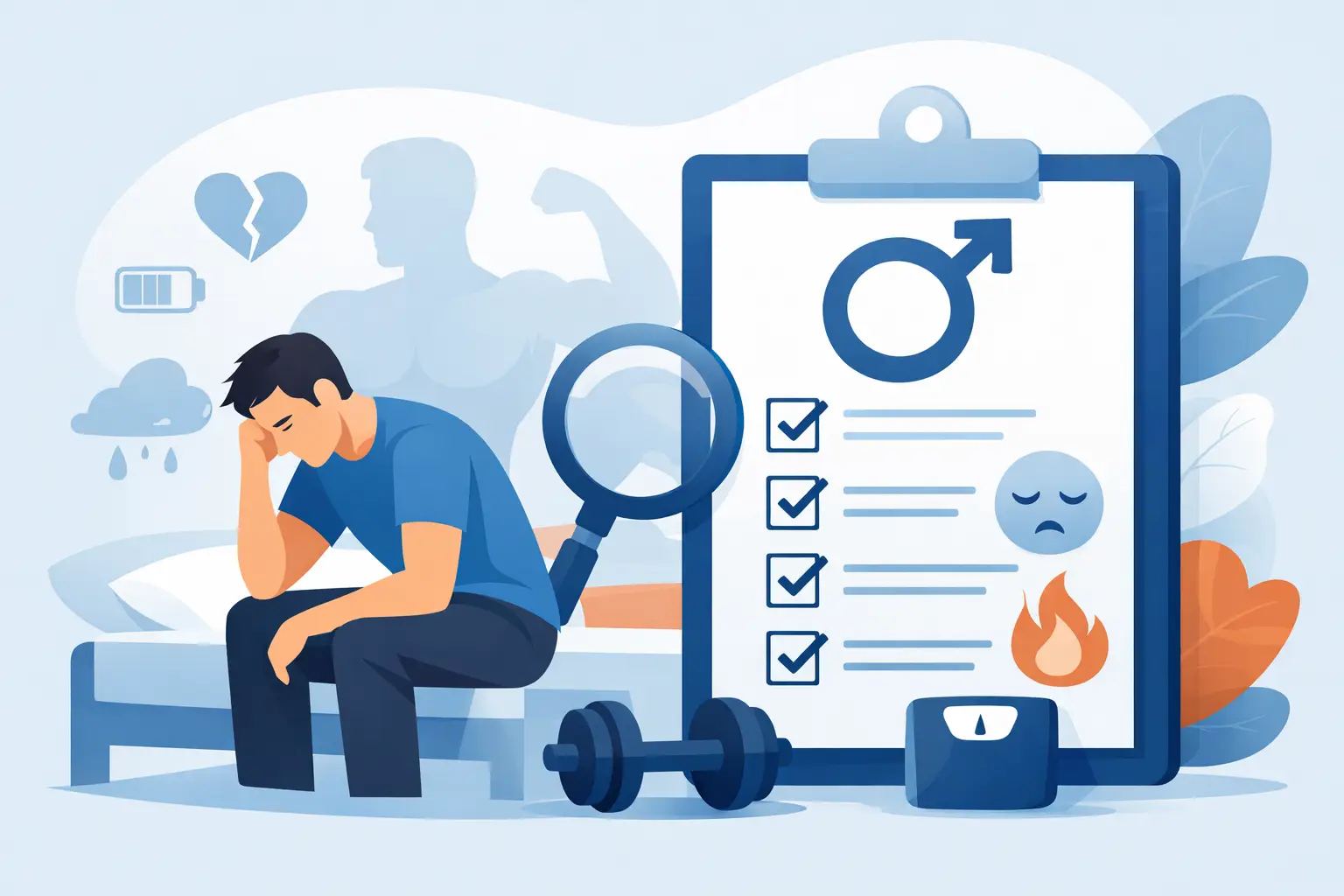
If your workouts feel flatter, your sex drive is off, and your usual edge has quietly disappeared, brushing it off as stress may be costing you. A low testosterone symptoms checklist can help you spot patterns that are easy to miss when life is busy and energy has become your new baseline.
Testosterone affects far more than libido. It helps regulate muscle mass, body composition, motivation, focus, mood, sleep quality, and overall vitality. When levels drop, men often notice changes slowly. That is exactly why low T gets overlooked. The shift can be gradual enough that you adapt to it instead of asking why you feel older, softer, less driven, or less like yourself.
Why a low testosterone symptoms checklist matters
Most men do not wake up one day with a single obvious symptom and a clear answer. It usually shows up as a cluster of changes. You are more tired than you should be. Your recovery is slower. You may feel irritable, less confident, or mentally foggy. Sex becomes less frequent or less satisfying. Then weight gain starts creeping in, especially around the midsection, even though your habits have not changed much.
A checklist is useful because it shifts the question from Is something wrong with me to How many of these signs are showing up at once? That pattern matters. One symptom alone can point to stress, poor sleep, overtraining, depression, thyroid issues, or simple burnout. Several symptoms together make the case for a more serious look at hormones.
Low testosterone symptoms checklist
This is not a diagnosis. It is a practical way to notice whether your body is signaling a hormonal issue worth testing.
Sexual health changes
Low libido is one of the most common complaints. That can look like less interest in sex, fewer sexual thoughts, or a noticeable drop in desire compared with your normal baseline. Some men also experience fewer morning erections or changes in erectile quality. Erectile dysfunction is not always caused by low testosterone, but when it appears alongside fatigue, mood shifts, and reduced motivation, hormones deserve attention.
Energy that never fully comes back
This is not just feeling tired after a late night. Men with low testosterone often describe a deeper kind of fatigue. They wake up tired, hit afternoon crashes hard, and feel like caffeine is doing less and less. You may still be functioning, but it feels forced. Your stamina at work, in the gym, and at home may all take a hit.
Mood and motivation shifts
Testosterone has a real effect on drive and emotional steadiness. Lower levels can show up as irritability, low mood, reduced resilience, less confidence, or a general sense of flatness. Some men say they do not feel exactly depressed, but they do not feel sharp, ambitious, or fully engaged either. That distinction matters.
Loss of muscle and strength
If your body composition is changing despite consistent workouts, pay attention. Testosterone supports protein synthesis, muscle maintenance, and physical performance. Lower levels can make it harder to build or keep lean muscle. You may notice your lifts going down, your recovery taking longer, or your physique looking softer even when you are training regularly.
Increased body fat
A stubborn increase in belly fat is a common red flag. Low testosterone can contribute to reduced muscle mass and a slower-feeling metabolism, which often makes fat gain easier and fat loss more frustrating. This can become a cycle because higher body fat can also affect hormone balance.
Brain fog and poor concentration
When testosterone is low, mental performance can feel off. You may struggle to focus, lose your train of thought more often, or feel less decisive. For busy professionals and high-performing men, this symptom is especially frustrating because it cuts into productivity and confidence in a way that is hard to explain.
Poor sleep or non-restorative sleep
Hormones and sleep have a two-way relationship. Low testosterone can be linked with poor sleep quality, and poor sleep can drag testosterone down further. If you are sleeping enough hours but still waking up drained, that is worth noting. Sleep apnea can also lower testosterone and mimic many low T symptoms, so this is one area where proper evaluation matters.
Reduced recovery and physical resilience
You may notice more soreness after training, a harder time bouncing back from stress, or a general sense that your body does not recover the way it used to. That slower rebound can be easy to blame on age alone, but age is not the only factor.
When symptoms are easy to dismiss
The reason low T often goes untreated is simple. Nearly every symptom can be rationalized. Fatigue gets blamed on work. Weight gain gets blamed on getting older. Low libido gets blamed on relationship stress. Brain fog gets blamed on lack of sleep. Sometimes those explanations are true. Sometimes they are only part of the picture.
That is why context matters. If several of these symptoms arrived around the same time, have persisted for months, and are affecting performance, confidence, or quality of life, it is time to stop guessing.
What low testosterone is not
A good low testosterone symptoms checklist is useful, but it should also come with some honesty. Not every man with fatigue and low motivation has low T. Thyroid dysfunction, chronic stress, insulin resistance, depression, medication side effects, heavy alcohol use, and poor sleep habits can create a similar picture. So can intense calorie restriction and overtraining.
There is a trade-off here. Self-awareness helps, but self-diagnosing based on social media clips or one bad week does not. The smartest move is clinical testing with real follow-up, not hype.
Who should get evaluated
If you are noticing multiple symptoms from this checklist, testing is a reasonable next step. It is especially worth considering if you are over 30, under chronic stress, carrying excess body fat, noticing declining gym performance, or feeling a measurable drop in sexual health and mental sharpness.
Men who want to optimize performance often wait too long because they are still functioning at a decent level. But decent is not the same as optimal. If your baseline has clearly changed, that is enough reason to look deeper.
What proper testing should include
A testosterone level by itself does not always tell the full story. Timing matters, symptoms matter, and broader labs matter. Total testosterone is important, but free testosterone, estrogen balance, thyroid markers, metabolic health, and other clinical factors may also need to be reviewed depending on the situation.
This is where individualized care separates real treatment from generic fixes. The goal is not to chase a number. The goal is to understand why you feel off and whether hormone optimization is actually the right move.
If the checklist sounds familiar, what happens next?
If this low testosterone symptoms checklist sounds uncomfortably accurate, do not settle for feeling average and calling it normal. Start with a medical evaluation. The right provider will look at your symptoms, labs, goals, lifestyle, and overall health before recommending anything.
For some men, the answer may be better sleep, improved body composition, less alcohol, or a more strategic training plan. For others, medically supervised hormone optimization may be the move that helps them regain energy, drive, strength, libido, and confidence. It depends on the full picture.
At a clinic like Thrive Health Solutions, that full-picture approach matters because low testosterone rarely exists in isolation. Weight gain, fatigue, poor recovery, and declining confidence often overlap, and a personalized plan can address more than one problem at once.
The real question behind the checklist
Most men are not just asking, Do I have low testosterone? They are really asking, Why do I not feel like myself anymore? That is the right question. Because when your hormones are off, the impact shows up across your entire life – how you work, how you train, how you show up in your relationships, and how confident you feel in your own skin.
You do not need to panic over every symptom. But you also do not need to accept a lower standard for how you feel. If the signs are there, get clear answers and give yourself the chance to feel strong, focused, and fully switched on again.