
Table of Contents
- Understanding Low Libido After Menopause
- Hormone Replacement Therapy for Low Libido
- Treating Vaginal Dryness and Low Libido in Menopause
- Pelvic Floor Physical Therapy and Sexual Function
- Natural Remedies for Low Libido After Menopause
- Sex Therapy and Counseling for Menopausal Women
- FDA-Approved Medications and Medical Options
- Creating Your Personalized Treatment Plan
Last Updated: July 18, 2026
Low libido after menopause affects many women, but it’s treatable. Proven treatments exist, ranging from hormone replacement therapy to pelvic floor physical therapy to lifestyle interventions. Below, we’ll walk you through seven evidence-based strategies that can restore sexual desire and satisfaction during this life stage.
The decline in libido after menopause stems primarily from hormonal shifts. Estrogen levels drop dramatically, directly impacting vaginal lubrication, blood flow to the genitals, and the neurochemical cascades that fuel sexual arousal. But hormones aren’t the whole story. Psychological factors, relationship dynamics, and physical health all play significant roles in sexual function during and after menopause.
Understanding Low Libido After Menopause
Sexual desire doesn’t disappear at menopause, it transforms. The postmenopausal years bring real physiological changes that can make arousal more difficult, but these changes are treatable. Many women report that with the right interventions, sexual satisfaction actually improves after menopause.
Estrogen maintains the thickness and elasticity of vaginal tissue, supports healthy blood flow to the clitoris and vulva, and influences neurotransmitter production in the brain that drives desire. When estrogen plummets, vaginal atrophy develops, the vaginal walls become thinner, drier, and less elastic. This often triggers dyspareunia, or pain during intercourse, which naturally suppresses sexual interest.
Testosterone plays a critical role in sexual desire for women. Women produce testosterone in their ovaries and adrenal glands, and levels decline gradually with age and more sharply after menopause. Low testosterone correlates directly with reduced libido, decreased clitoral sensitivity, and diminished sexual satisfaction.
Hormonal fluctuations during the perimenopausal years create additional complexity. As estrogen and progesterone levels swing unpredictably, mood, energy, and sexual interest can fluctuate wildly. Sleep disruption from hot flashes compounds fatigue and reduces sexual desire.
The decline in sexual desire after menopause is primarily driven by estrogen deficiency and testosterone decline, but these hormonal changes are addressable through multiple treatment pathways.
Hormone Replacement Therapy for Low Libido
Hormone replacement therapy (HRT) remains one of the most effective treatments for restoring libido after menopause. By replenishing estrogen and sometimes progesterone, HRT reverses vaginal atrophy, restores healthy blood flow, and stabilizes the neurochemical environment that supports sexual desire. Many women report noticeable improvement within 4-8 weeks of starting HRT.
Bioidentical hormones are molecularly identical to the hormones your body produced before menopause and are derived from plant sources and compounded to match your individual needs. Synthetic hormones are chemically distinct from human hormones and often produce different metabolic effects. Research suggests bioidentical hormones may offer superior tolerability and sexual function outcomes.
Testosterone replacement for women has gained recognition as a critical tool for restoring sexual desire. Women with low testosterone often experience reduced libido, decreased clitoral sensitivity, difficulty achieving orgasm, and diminished sexual satisfaction. Testosterone therapy, delivered via cream, pellet, or patch, can restore sexual function within weeks. Appropriate dosing is key: too little provides no benefit, while too much can trigger unwanted side effects.
If you’ve tried standard HRT without sexual improvement, ask your provider about testosterone replacement specifically. Many conventional doctors underestimate its importance for postmenopausal sexual function.
Treating Vaginal Dryness and Low Libido in Menopause
Vaginal dryness is one of the most direct physical barriers to sexual desire and function after menopause. When vaginal tissue becomes atrophied and dry, intercourse becomes uncomfortable or painful, which naturally suppresses arousal and desire.
Vaginal moisturizers and lubricants serve different purposes and work best in combination. Vaginal moisturizers, like hyaluronic acid-based creams, are applied regularly to maintain baseline vaginal hydration. Lubricants are applied immediately before intercourse to reduce friction and discomfort. Water-based lubricants are gentler; silicone-based lubricants last longer but can degrade latex condoms.
The mistake many women make is relying on lubricant alone without addressing underlying vaginal atrophy. Combine regular vaginal moisturizers with either HRT or localized vaginal estrogen therapy (creams, tablets, or rings that deliver estrogen directly to vaginal tissue). This two-pronged approach addresses both the symptom and the underlying cause.
Vaginal dilators and pelvic floor health represent an underutilized but powerful treatment pathway. Many women develop tension in the pelvic floor muscles as a protective response to vaginal pain. This tension creates a vicious cycle: tight pelvic floor muscles reduce blood flow to the genitals, worsen vaginal dryness, and make intercourse more painful. Vaginal dilators, graduated cylinders of increasing size, help gently stretch and relax these muscles, restoring normal blood flow and sensation.
Avoid aggressive stretching or forcing dilators, this can increase pelvic floor tension rather than reduce it. Work with a pelvic floor physical therapist to use dilators correctly and safely.
Pelvic Floor Physical Therapy and Sexual Function
Pelvic floor physical therapy is one of the most underutilized treatments for sexual dysfunction after menopause, yet it delivers measurable results. A specialized pelvic floor physical therapist can assess muscle tension, teach relaxation techniques, and guide progressive exercises to restore normal pelvic floor function. This directly improves blood flow to the genitals, enhances sensation, and reduces pain during intercourse.
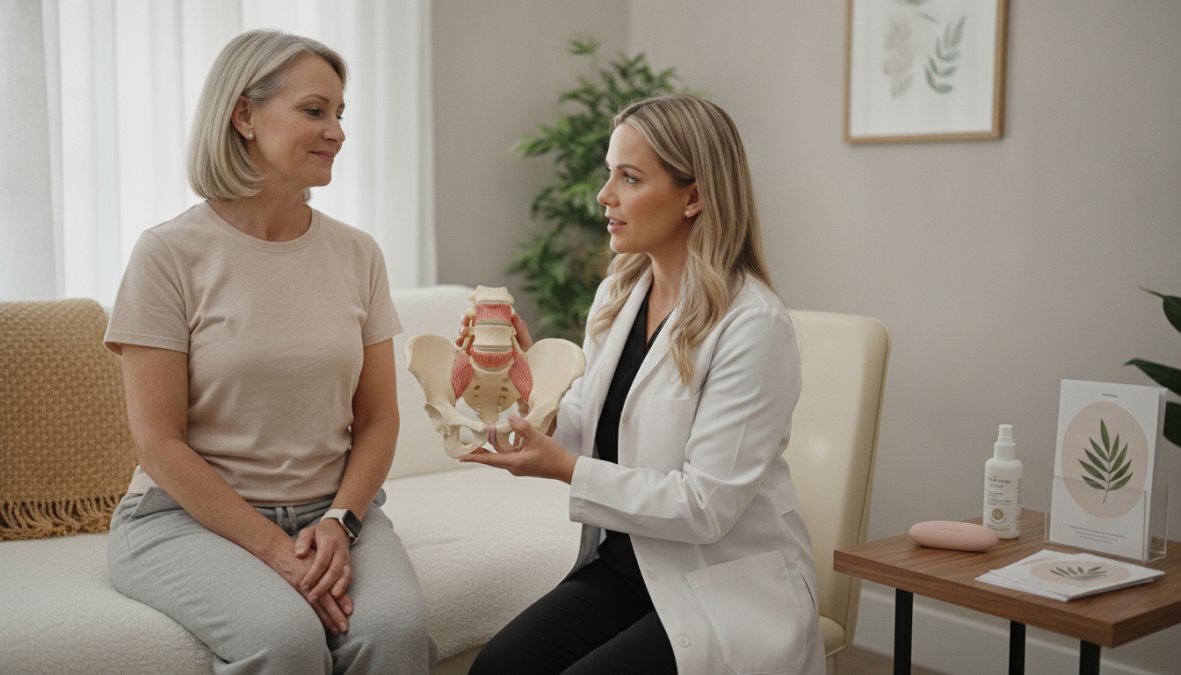
The pelvic floor muscles support the uterus, bladder, and bowel, but they also surround the vagina and clitoris and play a critical role in sexual response. During arousal, these muscles should relax to allow increased blood flow and sensation. After menopause, many women develop hypertonic (overly tight) pelvic floor muscles as a protective response to vaginal dryness or pain.
A pelvic floor physical therapist uses internal and external assessment to identify tension patterns, then teaches relaxation techniques including deep breathing, gentle stretching, and progressive muscle relaxation. Over 8-12 sessions, most women experience significant improvement in sexual comfort and satisfaction.
Research shows that women who complete pelvic floor physical therapy report improved arousal, increased orgasmic frequency, and reduced pain during intercourse. This approach works best when combined with other treatments: HRT for vaginal health, vaginal moisturizers for comfort, and partner communication for emotional intimacy.
Pelvic floor physical therapy addresses the muscular tension that often accompanies menopause and directly improves sexual function by restoring normal blood flow and sensation.
Natural Remedies for Low Libido After Menopause
While hormonal and physical therapies form the foundation of treatment, lifestyle changes and mind-body practices amplify results significantly.
Lifestyle changes for improved sexual wellness start with sleep quality. Poor sleep, common during menopause due to hot flashes and night sweats, directly suppresses sexual desire and arousal. Prioritize consistent sleep schedules, cool bedroom temperatures, and addressing hot flashes through HRT or other means.
Regular physical exercise improves cardiovascular function, which directly supports sexual arousal. Aerobic activity and strength training improve body confidence and energy levels, both of which support sexual desire. Aim for at least 150 minutes of moderate aerobic activity per week, combined with 2-3 sessions of strength training.
Stress reduction is non-negotiable for sexual function. Chronic stress elevates cortisol, which suppresses sex hormones and impairs blood flow to the genitals. Meditation, yoga, and deep breathing practices reduce stress hormones and activate the parasympathetic nervous system, the physiological state required for arousal. Even 10 minutes of daily meditation can noticeably improve sexual desire within weeks.
Mindfulness practices help women reconnect with sexual pleasure and reduce performance anxiety. Practices like body scanning, sensate focus exercises (non-goal-oriented touch with a partner), and mindful masturbation can restore sexual confidence and desire.
Nutritional support matters: zinc supports testosterone production, L-arginine improves blood flow, and omega-3 fatty acids support cardiovascular health and hormone production. Work with a practitioner experienced in sexual health to identify which supplements are appropriate for your situation.
Start with sleep, exercise, and stress reduction before adding supplements. These lifestyle foundations often produce noticeable improvement in sexual desire within 4-6 weeks.
Sex Therapy and Counseling for Menopausal Women
Sexual dysfunction after menopause is never purely physical or purely psychological, it’s always both. Even when physical treatments like HRT successfully restore vaginal health, psychological factors often remain.
Partner communication and intimacy form the foundation of sexual satisfaction. Many couples struggle to discuss sexual changes openly, which creates distance and misunderstanding. A sex therapist facilitates conversations about desire, pleasure, and physical changes in a safe, non-judgmental environment. Specific techniques like sensate focus exercises help couples rebuild physical intimacy without pressure or performance anxiety.
Individual counseling addresses personal psychological factors that suppress sexual desire: body image concerns, trauma history, anxiety, or depression. Cognitive-behavioral therapy (CBT) helps women identify and shift thought patterns that interfere with sexual pleasure. Many women report that even 6-8 sessions of therapy produce noticeable shifts in sexual desire and satisfaction.
The role of erotic stimuli and sexual fantasy shouldn’t be overlooked. After menopause, many women need more direct clitoral stimulation to achieve arousal, and some benefit from incorporating erotica, fantasy, or sex toys into their sexual practice.
FDA-Approved Medications and Medical Options
Beyond HRT, several FDA-approved medications specifically address sexual dysfunction in women.
Flibanserin (Addyi) was the first FDA-approved medication specifically for low sexual desire in women. It works by modulating neurotransmitters in the brain that regulate arousal and desire. Flibanserin is taken daily and requires several weeks to show effect. Individual response varies considerably.
Vyleesi (bremelanotide) works on melanocortin receptors in the brain to increase sexual desire. Vyleesi is injected 45 minutes before anticipated sexual activity, making it more targeted than daily flibanserin. Both medications carry potential side effects and work best when combined with other treatments like HRT and sex therapy.
Creating Your Personalized Treatment Plan
The most effective approach to treating low libido after menopause is individualized. What works for one woman may not work for another, and most women benefit from combining multiple treatment modalities.
Start by addressing foundational issues: sleep quality, stress levels, and physical exercise. These lifestyle changes often produce noticeable improvement within 4-6 weeks. Simultaneously, consider whether hormonal therapy makes sense for your situation. If vaginal dryness and atrophy are significant factors, HRT or localized vaginal estrogen therapy should be part of your plan.
Add pelvic floor physical therapy if you experience pain during intercourse or suspect pelvic floor tension. Consider sex therapy or counseling if psychological factors, relationship dynamics, or communication barriers are present.
The timeline for improvement varies, but most women notice measurable changes within 4-8 weeks when multiple interventions are combined. Sexual satisfaction often continues improving over 3-6 months as hormones stabilize, pelvic floor tension resolves, and psychological confidence rebuilds.
Low libido after menopause is one of the most treatable sexual health challenges women face. Yet many women suffer in silence, assuming sexual decline is inevitable. A comprehensive approach combining bioidentical hormone replacement therapy, pelvic floor physical therapy, and evidence-based counseling addresses the physical and psychological dimensions of sexual health. If you’re ready to reclaim sexual satisfaction after menopause, BOOK NOW and discover how doctor-supervised treatments can transform your sexual wellness.
Supporting Research and Resources
According to the North American Menopause Society clinical guidelines, hormone replacement therapy remains the most effective treatment for menopausal sexual dysfunction when vaginal atrophy and low estrogen are primary factors. Research published in The Journal of Sexual Medicine demonstrates that pelvic floor physical therapy produces measurable improvements in sexual function and pain reduction in postmenopausal women within 8-12 weeks of treatment.
Studies from the American Psychological Association on menopause and sexual function show that cognitive-behavioral therapy and sex therapy produce significant improvements in sexual desire and satisfaction, particularly when combined with medical interventions. These evidence-based approaches work because they address the interconnected physical, hormonal, and psychological factors that influence sexual function during this life stage.
Your sexual health matters at every age. The treatments outlined in this guide are evidence-based, safe when properly supervised, and effective for the vast majority of women who use them.
Frequently Asked Questions
What causes low libido after menopause?
Low libido after menopause is primarily driven by declining estrogen and testosterone levels, which directly affect sexual desire and arousal. Hormonal fluctuations during perimenopause and postmenopause reduce blood flow to genital tissues, causing vaginal atrophy and dyspareunia (painful intercourse). Additionally, symptoms like hot flashes, sleep disruption, and mood changes compound sexual dysfunction. Psychological factors, stress, body image concerns, and relationship dynamics, also play a significant role. Understanding these interconnected causes is essential to treat low libido after menopause effectively.
How does bioidentical hormone replacement therapy differ from standard HRT for treating low libido?
Bioidentical hormone replacement therapy uses hormones structurally identical to those your body produces naturally, often delivered through innovative methods like compounded formulations or peptide-based delivery systems. Standard HRT may use synthetic or animal-derived hormones with different molecular structures. Bioidentical HRT allows for more precise dosing tailored to individual hormone levels, potentially improving sexual health outcomes. Many patients report better tolerability and faster results with bioidentical approaches. However, individual response varies, what matters most is working with a doctor-supervised clinic that monitors your progress and adjusts treatment based on your specific needs and symptoms.
Can pelvic floor physical therapy actually improve sexual function after menopause?
Yes. Pelvic floor physical therapy strengthens the muscles responsible for sexual arousal, orgasm, and sensation. Weak pelvic floor muscles, common after menopause due to estrogen loss, contribute to reduced sexual response and difficulty achieving orgasm. A trained pelvic floor therapist teaches targeted exercises and techniques to restore muscle tone, improve blood flow to genital tissues, and enhance the sexual response cycle. When combined with other treatments like HRT or vaginal moisturizers, pelvic floor therapy often produces faster and more satisfying results. This is one of the most underutilized yet effective approaches to treating low libido after menopause.
What role does mindfulness play in treating low libido after menopause?
Mindfulness addresses the mind-body disconnect that often accompanies menopause, which can severely impact sexual desire and arousal. Stress, anxiety, and negative self-talk interfere with the sexual response cycle by activating the nervous system's fight-or-flight response. Mindfulness practices, meditation, breathwork, body scanning, activate the parasympathetic nervous system, creating the calm, focused state necessary for sexual arousal. Regular mindfulness also reduces hot flashes and improves sleep, both of which boost libido. When combined with hormone therapy or sex therapy, mindfulness-based approaches significantly enhance sexual satisfaction and intimacy without medication side effects.
This article was written using GrandRanker