Table of Contents
- How Sleep Quality Affects Testosterone Production
- How Many Hours of Sleep for Testosterone
- Sleep Deprivation and Testosterone
- Sleep Apnea and Testosterone
- Ways to Improve Sleep Quality Naturally
- Testing and Interpreting Your Testosterone Levels
- Frequently Asked Questions
Last Updated: October 14, 2026
How Sleep Quality Affects Testosterone Production
The relationship between sleep and testosterone is direct and measurable. When you sleep poorly, your body struggles to produce and regulate hormones. At Thrive Health Solutions, we help patients understand this connection because it often explains fatigue, low libido, and mood changes they’ve been experiencing.
How sleep quality affects testosterone production starts with timing. Your body produces most testosterone during deep sleep and REM sleep. These aren’t the same as just lying in bed for eight hours. Quality matters as much as duration.
The sleep-wake cycle controls hormone timing throughout the night. Your circadian rhythm, the internal clock that runs on roughly a 24-hour schedule, tells your body when to produce testosterone. This rhythm depends on consistent sleep patterns.
The sleep-wake cycle and hormone timing
Your testosterone levels follow a natural pattern tied to sleep. They rise during the night, peak in the early morning hours, and gradually decline through the day. This rhythm only works if your sleep is continuous and deep enough to reach the stages where hormone production happens.
REM sleep and deep sleep are where testosterone gets made. REM (rapid eye movement) sleep is when dreams happen. Deep sleep, also called slow-wave sleep, is when your body does its heaviest repair work. Both stages matter.
The circadian rhythm also controls cortisol, your stress hormone. When sleep is fragmented or too short, cortisol stays elevated. High cortisol suppresses testosterone production.
REM and deep sleep stages matter most
Not all sleep is equal. You cycle through different sleep stages throughout the night. Early cycles include more deep sleep. Later cycles include more REM sleep. You need both. If you’re sleeping only five or six hours, you’re cutting short the later REM cycles, which your brain needs for mood and cognitive function.
Deep sleep is where growth hormone and testosterone production peak. This stage is harder to reach as you age, especially if you’re stressed or not sleeping consistently. One poor night doesn’t destroy your testosterone, but weeks of fragmented sleep absolutely will.
The stages also depend on how long you’ve been asleep. You don’t reach deep sleep in the first 30 minutes. It takes time. This is why very short sleep durations harm testosterone more than people expect.
How Many Hours of Sleep for Testosterone
How many hours of sleep for testosterone depends on both duration and quality. Most adults need seven to nine hours to maintain healthy hormone levels. But the number matters less than whether those hours are continuous and deep.
Some people ask if six hours is enough. Generally, six hours is not optimal for testosterone production. Your body needs time to cycle through all sleep stages multiple times. Six hours usually means one or two complete cycles. Seven to nine hours gives you three to four cycles, which is closer to what your hormonal system needs.
Sleep duration and hormone recovery
The longer you sleep consistently, the more your testosterone levels recover and stabilize. One study found that men sleeping five hours had significantly lower testosterone than those sleeping seven to eight hours. The difference was measurable within days of consistent short sleep.
But this doesn’t mean sleeping ten hours is better. There’s a point where more sleep doesn’t help. Seven to nine hours is the window where most people see stable, healthy hormone levels. Beyond that, you’re not getting additional testosterone benefit.
Age matters here too. As you get older, your body produces less testosterone naturally. Poor sleep makes this worse. A 50-year-old with fragmented sleep will have lower testosterone than a 50-year-old sleeping seven solid hours. This is why sleep quality becomes more important as you age.
Why consistency matters as much as length
Sleeping seven hours one night and five hours the next is worse than consistently sleeping six hours. Your body needs predictable sleep to maintain hormone rhythms. If you’re sleeping at different times each night or waking at random hours, your circadian rhythm never settles.
This is the part most people miss. They think adding one good night of sleep will fix their hormone levels. It won’t. You need weeks of consistent sleep before testosterone levels normalize.
Going to bed and waking at the same time each day, even on weekends, is one of the most powerful things you can do for testosterone. Your body’s internal clock runs on consistency. When that clock is reliable, hormone production follows.
Sleep Deprivation and Testosterone
Sleep deprivation and testosterone have a clear dose-response relationship. The less you sleep, the lower your testosterone gets. This happens faster than most people realize.
What happens after just one poor night
One night of poor sleep lowers testosterone, but your body can recover quickly if the next night is good. The problem starts when poor sleep becomes the pattern. After three to five consecutive nights of disrupted or short sleep, testosterone levels drop noticeably. By two weeks of consistent poor sleep, the drop is significant and measurable in blood tests.
You might not feel the difference after one night. But your hormones are already affected. This is why people who travel frequently or work irregular hours often report fatigue and low libido, their sleep is never consistent enough for testosterone to stay stable.
Chronic sleep restriction and cortisol
When poor sleep becomes chronic, cortisol rises. Your body interprets sleep deprivation as stress. Cortisol is supposed to be high in the morning and low at night. With chronic poor sleep, cortisol stays elevated all day. This elevated cortisol directly suppresses testosterone production.
You end up in a difficult cycle. Poor sleep raises cortisol. High cortisol makes it harder to fall asleep and stay asleep. This perpetuates the problem. Breaking this cycle requires addressing sleep quality directly, not just trying to sleep more hours.
Chronic sleep restriction also affects testosterone receptors, the locks that let testosterone do its job in your cells. Even if your body makes testosterone, your cells might not respond to it properly if sleep deprivation has damaged these receptors.
Sleep Apnea and Testosterone
Sleep apnea and testosterone are connected through fragmented sleep. Sleep apnea interrupts breathing repeatedly during the night. Each interruption wakes you slightly, breaking your sleep into fragments. You might not remember waking, but your sleep architecture is shattered.
How fragmented sleep disrupts hormone cycles
Sleep apnea prevents you from spending enough time in deep sleep and REM sleep. Your breathing stops, oxygen drops, your body jolts you awake. This happens dozens or hundreds of times per night, depending on severity. Each time, you’re pulled out of the deeper sleep stages.
The result is sleep that looks long on paper but is actually broken into pieces. Someone with sleep apnea might spend eight hours in bed but only get four to five hours of actual restorative sleep.
Sleep apnea also causes oxygen drops. Low oxygen during sleep triggers stress responses. Your body releases adrenaline and cortisol to wake you up and restore breathing. This emergency response happens repeatedly all night. Chronic activation of your stress system suppresses testosterone.
When to seek clinical evaluation
If you snore loudly, wake gasping for air, feel exhausted despite sleeping eight hours, or have been told you stop breathing during sleep, you should get evaluated for sleep apnea. A sleep study is the only way to diagnose it. Sleep apnea is treatable, and treating it often restores testosterone levels significantly.
You don’t need to have all these symptoms. Even mild sleep apnea affects testosterone. If your sleep quality is poor and you can’t figure out why, sleep apnea is worth investigating. Many people don’t realize they have it until they get tested.
Ways to Improve Sleep Quality Naturally
Ways to improve sleep quality naturally focus on supporting your body’s natural sleep system. These aren’t quick fixes, but they work when applied consistently.
Sleep hygiene fundamentals
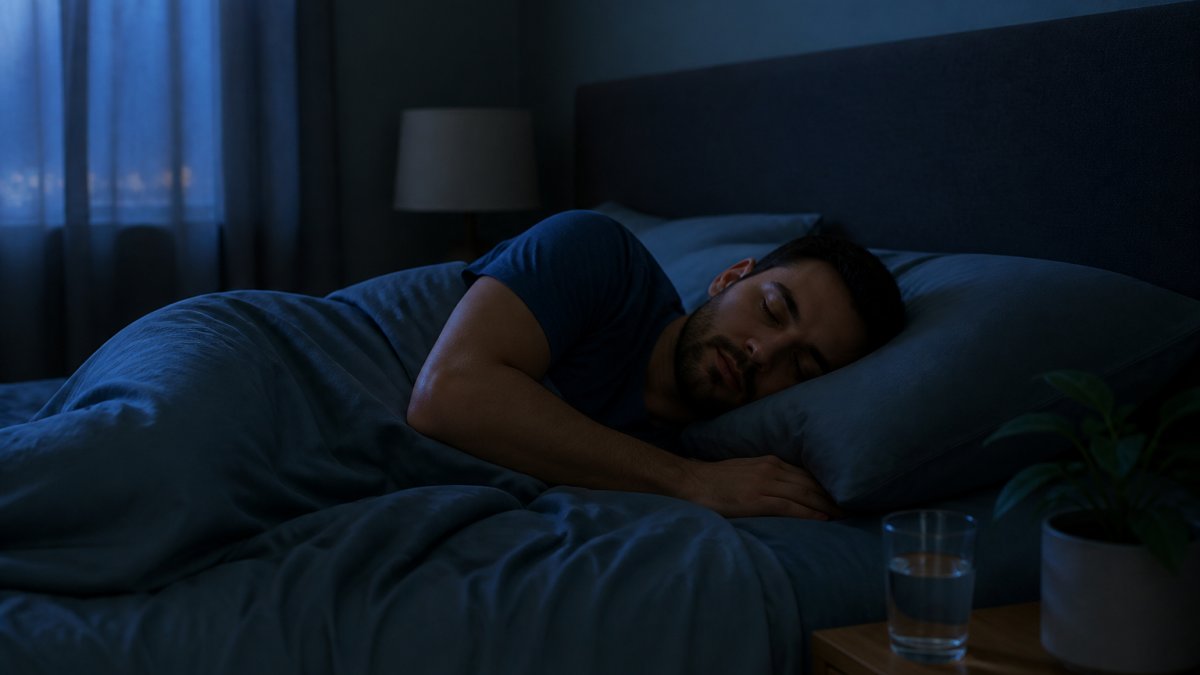
Keep your bedroom cool, dark, and quiet. Your body sleeps better in a cool environment. Aim for 65 to 68 degrees Fahrenheit.
Avoid caffeine after 2 PM. Caffeine has a half-life of five to six hours, meaning half of what you consumed is still in your system six hours later.
Stop eating large meals three hours before bed. Digestion interferes with sleep. Light snacks are fine, but heavy meals keep your body working when it should be resting.
Limit alcohol. Alcohol might help you fall asleep, but it disrupts sleep architecture. You’ll wake more often and spend less time in deep sleep.
Circadian rhythm alignment and timing
Go to bed and wake at the same time every day, including weekends. This is the single most powerful sleep intervention for hormone production. Your body’s internal clock learns the schedule and prepares for sleep at that time.
Get sunlight exposure early in the day. Bright light in the morning sets your circadian rhythm. This makes it easier to fall asleep at night. Even 10 to 15 minutes of morning sunlight helps.
Avoid bright light in the evening. Blue light from screens suppresses melatonin, the hormone that makes you sleepy. Dim your lights an hour before bed.
Exercise during the day, but not within three hours of bedtime. Exercise improves sleep quality, but timing matters. Vigorous exercise close to bedtime can keep you wake.
When sleep improvement alone isn’t enough
If you’ve been applying these strategies consistently for four to six weeks and your sleep still hasn’t improved, something else might be going on. Sleep disorders like sleep apnea, restless leg syndrome, or insomnia need professional evaluation. These conditions won’t improve with sleep hygiene alone.
At Thrive Health Solutions, we assess sleep quality as part of understanding your hormone levels. Poor sleep is often a symptom of other issues, hormonal imbalance, thyroid problems, or metabolic dysfunction. Sometimes treating the underlying condition improves sleep automatically.
Stress and anxiety also disrupt sleep. If your mind races at night or you wake with worry, addressing stress through therapy, meditation, or other methods helps. Sleep hygiene helps, but it can’t override chronic stress.
Testing and Interpreting Your Testosterone Levels
Once you’ve improved your sleep, a blood test can show whether your testosterone has recovered. Testosterone tests measure the amount of testosterone in your blood at a specific time.
There are different testosterone measurements. Total testosterone includes all testosterone in your blood. Free testosterone is the portion your body can actually use. Some labs also measure bioavailable testosterone.
Normal testosterone ranges vary by age and sex. For adult men, normal total testosterone is generally between 300 and 1000 ng/dL.
Testosterone also varies by time of day and season. A single test gives a snapshot, not your full picture.
Sleep quality directly impacts testosterone production through deep sleep stages, circadian rhythm stability, and hormone recovery cycles. If you’re experiencing fatigue, low libido, or mood changes, poor sleep is often the culprit.
Frequently Asked Questions
Can lack of sleep lower testosterone?
Yes. Sleep deprivation disrupts the natural rhythms that control testosterone production. Even one night of poor sleep can reduce testosterone levels the next day, and chronic sleep restriction compounds the effect by elevating cortisol, a stress hormone that suppresses testosterone synthesis. Men and women who consistently get fewer than six hours of sleep often show measurably lower testosterone on blood tests.
How many hours of sleep do you need for healthy testosterone levels?
Most adults need seven to nine hours nightly to maintain hormonal balance. Testosterone peaks during deep sleep and REM sleep, which occur in longer sleep cycles. Fewer than six hours of sleep regularly disrupts these restorative stages. Your personal requirement depends on age, stress, and individual factors, so tracking how you feel, energy, mood, libido, is as important as the clock.
Can sleep apnea affect testosterone levels?
Yes. Sleep apnea fragments sleep continuity and prevents sustained deep sleep, blocking the hormone production window. The repeated oxygen drops also trigger stress responses that elevate cortisol and suppress testosterone. Men with untreated sleep apnea often have significantly lower testosterone than those without the disorder. A clinical evaluation and sleep study can identify whether apnea is affecting your hormone levels.
How can I improve my sleep quality naturally?
Start with sleep hygiene: keep your bedroom dark, cool (around 65-68°F), and quiet. Maintain a consistent sleep schedule, even on weekends. Limit screen time one hour before bed, avoid caffeine after 2 p.m., and get morning sunlight exposure to anchor your circadian rhythm. Exercise regularly but not close to bedtime. If these steps don’t improve your sleep after four to six weeks, or if you suspect sleep apnea or hormonal imbalance, consult a healthcare provider for further evaluation.