
Hot flashes that wake you at 2 a.m., a body that suddenly holds weight differently, and a shorter fuse than usual are not minor inconveniences. They can change how you work, train, sleep, socialize, and feel in your own skin. This menopause symptom management guide is built for women who are done being told to simply push through and are ready for a more personalized path forward.
Menopause is a normal life transition, but the symptoms can be anything but simple. Hormones affect far more than your cycle. As estrogen and progesterone levels fluctuate and eventually decline, they can influence temperature regulation, sleep, mood, muscle mass, vaginal tissue, bone health, and metabolic health. The right plan is not about treating a number on a lab report. It is about understanding the full picture and helping you feel like yourself again.
Why Menopause Symptoms Can Feel So Different
Perimenopause often begins before periods stop. During this transition, hormone levels can rise and fall unpredictably, which is why one month may bring night sweats and the next may bring anxiety, heavy periods, or exhaustion. Menopause is diagnosed after 12 consecutive months without a menstrual period, but symptoms may continue for years afterward.
No two women experience this stage in the same way. One woman may be most bothered by intense hot flashes, while another struggles with brain fog, disrupted sleep, joint aches, low libido, or stubborn abdominal weight gain. Stress, alcohol intake, existing health conditions, medications, thyroid function, sleep habits, and activity level can all intensify the experience.
That is why generic advice often falls flat. A useful plan starts with your symptoms, health history, goals, and risk factors rather than a one-size-fits-all protocol.
Menopause Symptom Management Guide: Start With a Full Assessment
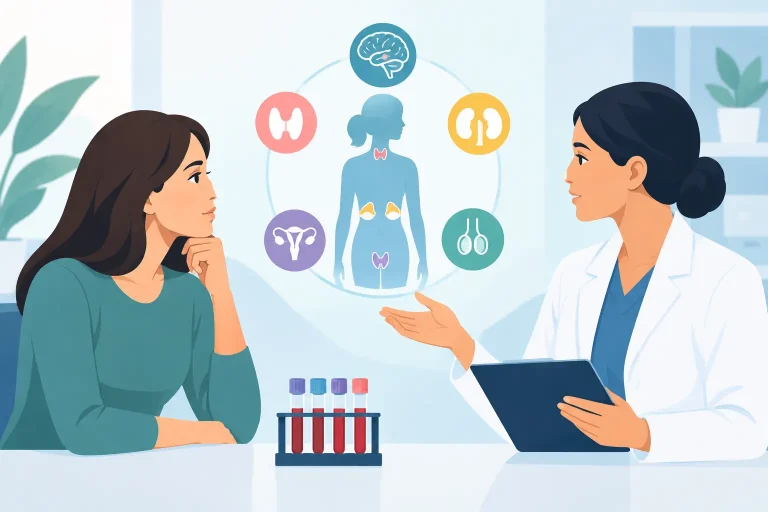
A comprehensive evaluation should look beyond whether you are having hot flashes. Your clinician may discuss your menstrual history, sleep quality, energy, mood, sexual wellness, weight changes, family history, medications, cardiovascular health, and bone-health risks. Depending on your situation, appropriate lab work may help rule out or identify issues that can overlap with menopause symptoms, including thyroid dysfunction, iron deficiency, vitamin deficiencies, or blood sugar concerns.
Hormone testing can be one part of the conversation, particularly in perimenopause when symptoms and cycles are changing. Still, symptoms and medical history are often more meaningful than chasing a single hormone value. Levels naturally fluctuate, and a thoughtful clinician uses testing as context, not as a shortcut to a prescription.
Be direct about what is affecting your quality of life. If sleep is your biggest issue, say so. If intimacy feels uncomfortable, do not minimize it. If weight gain has changed your confidence or your ability to stay active, it belongs in the discussion. The goal is a plan that improves how you function day to day, not one that simply looks good on paper.
Medical Options for Hot Flashes, Sleep, and More
For many eligible women, menopausal hormone therapy can be one of the most effective treatments for bothersome hot flashes and night sweats. Estrogen therapy may also help protect bone health in appropriate patients and can improve vaginal dryness and discomfort. If you have a uterus, progesterone is generally needed alongside systemic estrogen to protect the uterine lining.
The best delivery method depends on your needs. Options may include patches, creams, gels, oral medications, injections, or pellets. Some women prefer the convenience of a longer-lasting delivery method, while others want an option that can be adjusted more quickly. There are real trade-offs, so the right choice depends on your symptoms, personal preferences, health history, and ability to follow up consistently.
Bioidentical hormone therapy is a common point of interest for women seeking a more individualized approach. The term can refer to hormones that are structurally identical to those produced by the body, but it does not automatically mean every product or delivery method is right for every patient. Your provider should clearly explain the medication, expected benefits, possible side effects, dosing strategy, and monitoring plan.
Hormone therapy is not appropriate for everyone. A history of certain cancers, blood clots, stroke, unexplained vaginal bleeding, liver disease, or other conditions can change the recommendation. The timing of treatment matters, too. A physician-led consultation helps determine whether hormone therapy, nonhormonal treatment, or a combination of approaches is the safer and more effective route.
Do Not Overlook Vaginal and Urinary Symptoms
Vaginal dryness, burning, recurrent urinary discomfort, and pain during sex are common after estrogen declines, yet many women wait years to bring them up. Local vaginal estrogen and other prescription options may provide relief with less systemic exposure than whole-body hormone therapy. Lubricants and moisturizers can help, but persistent discomfort deserves medical attention rather than resignation.
Nonhormonal Treatments Have a Place
If hormone therapy is not a fit, there are prescription nonhormonal options that may reduce hot flashes or address mood and sleep concerns. Certain antidepressant medications, nerve-pain medications, blood-pressure medications, and newer therapies may be considered based on your health profile. The best option is not necessarily the strongest medication. It is the one that addresses your priorities while fitting your medical needs.
Build Lifestyle Support Around Your Treatment Plan
Lifestyle changes cannot replace medical care when symptoms are severe, but they can make treatment more effective and help you regain control. The most powerful strategies are often the least glamorous: consistent sleep, strength training, protein-forward meals, stress management, and alcohol awareness.
Strength training deserves special attention during midlife. Estrogen changes can contribute to shifts in muscle mass and body composition. Building and preserving muscle supports metabolism, stability, bone health, and long-term independence. You do not need punishing workouts to see results. A sustainable plan that includes resistance training two to three times a week, regular walking, and recovery can make a meaningful difference.
Nutrition should focus on consistency rather than restriction. Prioritizing protein, fiber-rich plants, hydration, and adequate calcium can support satiety, digestion, muscle maintenance, and bone health. For women experiencing weight gain, an individualized medical weight-management plan may be worth considering, especially when metabolic changes, appetite shifts, or insulin resistance are part of the picture.
Track your triggers for two to four weeks. Common hot-flash triggers include alcohol, spicy foods, caffeine, overheated rooms, poor sleep, and high stress. You do not need to eliminate every pleasure from your life. You need enough information to see patterns and make deliberate choices.
Be Careful With Supplements and Trend-Driven Fixes
The supplement aisle can make menopause feel like a problem that can be solved with one bottle. Some products may be useful for specific deficiencies or symptoms, but many menopause supplements have mixed evidence, inconsistent quality, or interactions with medications. More is not always better, particularly with herbs, high-dose vitamins, or products marketed as hormone support.
IV therapy, nutrient injections, and targeted wellness support may have a role when a clinician identifies a need, but they should not be positioned as a replacement for evaluating significant symptoms. The same standard applies to peptides and anti-aging treatments: consider them within a broader, medically supervised plan rather than as a standalone cure for menopause.
At Thrive Health Solutions, the focus is on connecting the dots across hormones, metabolic health, energy, body composition, and confidence so your care plan matches your real life.
When to Seek Care Promptly
Menopause symptoms deserve attention, but some changes should never be assumed to be hormonal. Contact a medical professional promptly for heavy or unusual bleeding, bleeding after menopause, chest pain, shortness of breath, a severe new headache, fainting, or sudden neurological symptoms. New depression, intense anxiety, or thoughts of self-harm also require timely support.
You should also ask for a deeper evaluation if fatigue is extreme, weight changes are rapid, symptoms appear suddenly, or treatment is not helping. Menopause can coexist with other conditions, and good care leaves room to investigate rather than dismiss.
You do not have to wait until symptoms become unbearable to ask for help. A clear conversation, a careful assessment, and a plan built around your goals can turn this transition into a powerful opportunity to protect your health, restore your confidence, and feel stronger in the years ahead.