Table of Contents
- What Is Peptide Therapy for Anti-Aging?
- How Peptide Therapy Works for Anti-Aging
- Commonly Used Anti-Aging Peptides
- How Long Does Peptide Therapy Take to Work?
- Safety of Injectable Peptides and Medical Supervision
- Peptide Film Delivery Methods and Other Administration Options
- Long-Term Sustainability and Maintenance Protocols
- Integration with Lifestyle and Nutrition
Last Updated: August 28, 2026
What Is Peptide Therapy for Anti-Aging?
Peptide therapy for anti-aging is the use of amino acid chains to trigger cellular repair, collagen synthesis, and metabolic optimization in the body. These short protein fragments signal cells to perform specific functions, regenerating tissue, increasing growth hormone production, or accelerating recovery from physical stress. Unlike hormone replacement therapy, which introduces hormones directly, peptide therapy works through cell-cell communication to prompt your body’s own systems to work more efficiently.
At Thrive Health Solutions, we recognize that peptides represent a shift in how we approach aging. Rather than simply replacing what time has taken away, peptides activate dormant repair mechanisms. The science is straightforward: as we age, our cells lose the ability to communicate effectively. Peptides restore that conversation.
The appeal is practical. You’re not taking a synthetic hormone that your body learns to depend on. You’re sending a signal. Your cells either respond or they don’t. If they respond, the results compound over weeks and months as tissue rebuilds, skin thickens, and energy improves.
How Peptide Therapy Works for Anti-Aging
Peptide therapy operates through two primary mechanisms: cellular repair and metabolic signaling. When administered, peptides bind to specific receptors on cell surfaces, triggering a cascade of biological events. These events don’t happen overnight. They unfold gradually as fibroblasts (the cells responsible for collagen production) receive signals to increase protein synthesis and as growth hormone secretagogues stimulate the pituitary gland to release more growth hormone.
Cellular Repair and Collagen Synthesis
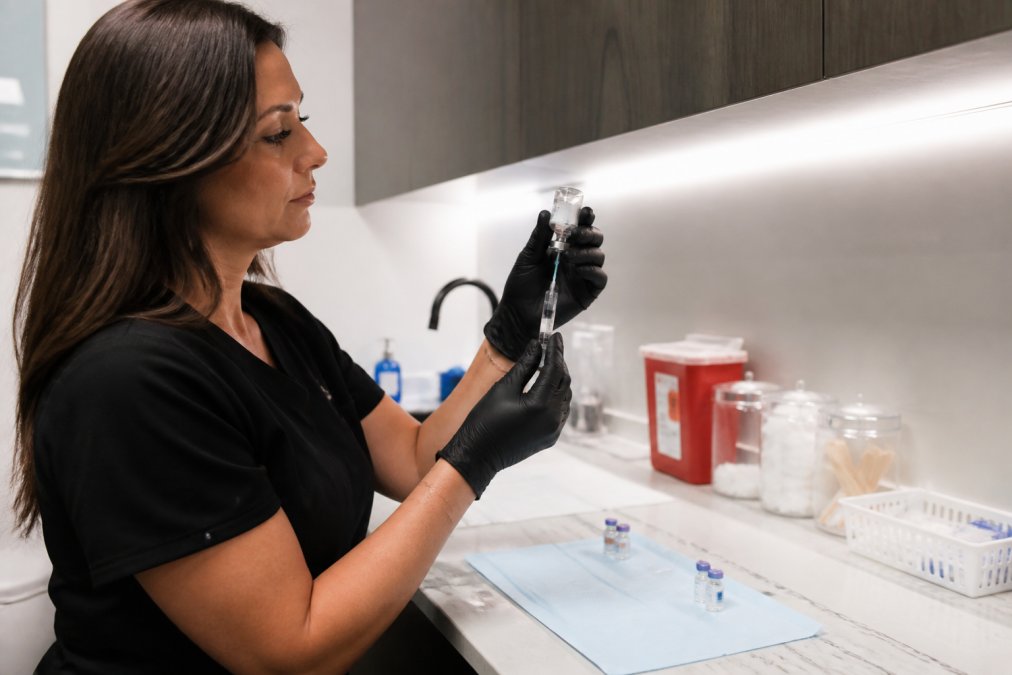
The aging process involves fibroblast senescence, the gradual shutdown of the cells that produce collagen and elastin. Young skin has abundant, active fibroblasts. Older skin has fewer of them, and the ones that remain work slowly. Peptides like collagen-stimulating peptides wake these cells up.
When peptides signal fibroblasts to increase collagen synthesis, the dermal matrix thickens. This is why people report improved skin elasticity and fewer visible wrinkles within 8-12 weeks of consistent peptide therapy (peer-reviewed research). It’s not a surface effect. The skin is actually rebuilding from within.
This mechanism also applies to deeper tissues. Peptides that promote tissue regeneration accelerate recovery in joints, tendons, and muscle. The same cellular repair process that improves skin appearance also improves physical function, another reason peptide therapy appeals to active adults managing age-related decline.
Growth Hormone Secretagogues and Metabolic Optimization
Growth hormone secretagogues are peptides that stimulate your pituitary gland to produce more growth hormone naturally. This is different from injecting growth hormone directly. Your body remains in control of production levels, which reduces the risk of the side effects associated with exogenous hormone therapy.
Higher growth hormone levels improve metabolic efficiency. Your body burns fat more readily, preserves muscle mass during weight loss, and recovers faster from exercise. Many people notice improved body composition, less fat, more lean muscle, without changing their diet or training significantly. The metabolic optimization happens at the cellular level.
Growth hormone also affects sleep quality, bone density, and immune function. This is why peptide therapy users often report feeling younger in ways that go beyond appearance. The systemic wellness benefits compound over months.
Commonly Used Anti-Aging Peptides
Not all peptides do the same thing. Different peptide sequences trigger different biological responses. Understanding which peptides address your specific concerns helps you work effectively with a medical provider.
BPC-157 and Tissue Regeneration
BPC-157 (Body Protection Compound-157) is a peptide derived from a protective protein found in gastric juice. It accelerates tissue repair across multiple systems: muscle, tendon, bone, and even the nervous system. Athletes and people recovering from injury use BPC-157 for faster healing. Anti-aging applications focus on its ability to improve blood flow and promote tissue regeneration in aging skin and joints.
BPC-157 works through multiple pathways, including increased growth factor production and anti-inflammatory response. People report improved joint mobility and reduced chronic pain alongside cosmetic improvements in skin texture. The peptide doesn’t just address appearance, it improves function.
Sermorelin and Systemic Wellness
Sermorelin is a growth hormone-releasing hormone (GHRH) analog. It stimulates your pituitary gland to produce more growth hormone naturally. Unlike BPC-157’s tissue-specific focus, sermorelin works systemically. It improves sleep quality, increases energy, enhances mood, and supports metabolic function across the board.
Many people choose sermorelin when they want broad anti-aging effects rather than targeted tissue repair. It’s particularly effective for people experiencing hormonal decline, the fatigue, mood swings, and weight gain that come with aging. Used consistently, sermorelin can shift your metabolic baseline and help you maintain muscle mass more easily.
How Long Does Peptide Therapy Take to Work?
The timeline for peptide therapy results depends on the specific peptide, your baseline health, and how consistently you use it. Most people notice initial changes within 2-4 weeks, but meaningful results, visible skin improvements, noticeable energy shifts, measurable body composition changes, typically emerge over 8-12 weeks (peer-reviewed research).
Collagen synthesis takes time. Your body doesn’t rebuild skin overnight. Fibroblasts receive the signal, increase protein production, and gradually deposit new collagen into the dermal matrix. This process accelerates compared to doing nothing, but it still follows biological timelines.
Metabolic changes can feel faster. People often report improved sleep and energy within the first 2-3 weeks of growth hormone secretagogue therapy. These subjective improvements precede the more visible physical changes. By week 6-8, improved body composition becomes noticeable. By week 12, the changes compound noticeably.
Consistency matters enormously. Peptide therapy works through repeated signaling. Missing doses or stopping therapy interrupts the process. The results you achieve reflect the consistency of your protocol, another reason medical supervision and clear maintenance plans are essential.
Safety of Injectable Peptides and Medical Supervision
Injectable peptides carry risks that deserve straightforward discussion. The primary concerns involve injection site reactions, potential immune responses, and the quality of the peptide product itself. These risks are manageable with proper medical oversight, but they’re not zero.
Injection site reactions, redness, swelling, mild pain, are common and typically resolve within hours. More serious immune responses are rare but possible, particularly with peptides your body hasn’t encountered before. This is why starting with lower doses and monitoring carefully is standard practice. hormone therapy safety.
The bigger safety issue is product quality. Peptides purchased from unverified sources may be contaminated, mislabeled, or impure. Compounded peptides, custom-formulated by licensed pharmacies, offer better quality control than black-market alternatives. However, even compounded medications require verification of the pharmacy’s licensing and quality standards.
Medical supervision isn’t just a formality. A qualified provider monitors your response, adjusts dosing based on results, screens for contraindications with other medications, and stops therapy if adverse effects emerge. This oversight catches problems early. It also ensures you’re using peptides appropriate to your specific situation, not just the peptides that are popular or trendy.
Peptide Film Delivery Methods and Other Administration Options
Peptide therapy doesn’t require traditional injections. Newer delivery methods, including peptide film technology, offer alternatives that some people find more convenient or comfortable.
Subcutaneous Injection vs. Topical Application
Subcutaneous injection, placing the peptide just under the skin, remains the most common and effective delivery method. The peptide enters the bloodstream reliably, and dosing is precise. Most people find the injection simple after the first few times. The needle is small, and the injection takes seconds.
Topical peptide application, creams, serums, or films applied to skin, offers convenience but with a tradeoff. Peptides are large molecules. They struggle to penetrate the skin barrier effectively. Topical peptides work primarily on surface-level skin improvements rather than systemic effects. If you’re seeking metabolic optimization or deep tissue repair, topical application alone won’t deliver those results.
Peptide film technology bridges this gap. A thin film dissolves under the tongue or on the skin, allowing the peptide to absorb through mucous membranes or into systemic circulation. This method avoids injection anxiety while delivering better bioavailability than topical creams. Thrive Health Solutions utilizes peptide film technology for effective hormone balancing and medical weight loss solutions.
Bioavailability and Therapeutic Efficacy
Bioavailability describes how much of the peptide your body actually uses. Injection delivers nearly 100% bioavailability, the peptide enters circulation intact (peer-reviewed research). Topical application delivers perhaps 5-15% bioavailability because most of the peptide sits on the skin surface rather than penetrating. Peptide film sits somewhere in the middle, typically 30-60% bioavailability depending on the specific peptide and formulation.
Higher bioavailability means lower doses can achieve the same effect. It also means faster results. This is why injected peptides show effects more quickly and reliably than topical alternatives. If therapeutic efficacy is your priority, injection or peptide film outperforms topical creams.
Cost and convenience push in different directions. Injections are inexpensive per dose but require either self-administration or regular clinic visits. Peptide film is more expensive but simpler to use. The choice depends on your priorities, maximum results versus maximum convenience.
Long-Term Sustainability and Maintenance Protocols
Peptide therapy works best as a long-term practice, not a short-term sprint. Many people ask whether they can stop after achieving results. The honest answer is that results gradually fade when therapy stops. Your body returns to its baseline aging trajectory.
This doesn’t mean you need to continue at the same dose forever. Many people follow a protocol of 8-12 weeks of active therapy, followed by a maintenance phase at lower doses. This pattern sustains results while reducing overall peptide use. Some people cycle on and off, using peptides for 12 weeks, then pausing for 4-6 weeks before resuming.
The sustainability question also involves cost and commitment. Peptide therapy requires consistent administration, either self-injection or regular clinic visits. It requires ongoing medical supervision to ensure safety and adjust protocols as needed. For people seeking a one-time fix, peptide therapy isn’t the answer. For people willing to commit to ongoing care, the results compound over years.
Bio-identical peptides, peptides that match naturally occurring sequences in your body, may offer better long-term tolerability than synthetic alternatives. Your immune system recognizes them as native compounds rather than foreign substances. This reduces the risk of developing antibodies against the peptide over time, which can reduce efficacy with extended use.
Integration with Lifestyle and Nutrition
Peptide therapy amplifies the effects of good lifestyle choices. It doesn’t replace them. The people who see the best results combine peptide therapy with consistent exercise, adequate sleep, and proper nutrition.
Protein intake becomes more important when you’re using peptides that stimulate collagen synthesis or muscle protein synthesis. Your body needs amino acid building blocks to construct new tissue. Inadequate protein intake limits how much collagen your fibroblasts can produce, even if peptides are signaling them to work harder.
Sleep quality directly affects growth hormone production. Peptides that stimulate growth hormone work best when you’re sleeping well. Poor sleep undermines the therapy. This creates a positive feedback loop: better sleep improves natural growth hormone production, which enhances peptide therapy results, which improves recovery and sleep quality further.
Exercise amplifies peptide effects on muscle and bone. Resistance training signals your body to build muscle. Growth hormone secretagogues enhance this signal. Together, they produce faster muscle gains than either alone. Similarly, tissue regeneration peptides work best when you’re actively using the tissues you’re trying to repair.
Metabolic health matters. People with insulin resistance or poor glucose control see smaller metabolic improvements from peptide therapy. Improving diet quality and managing blood sugar enhances peptide therapy results. This is why Thrive Health Solutions emphasizes integrated care, peptides work best as part of a comprehensive wellness approach that includes nutrition, exercise, sleep, and stress management.
Peptide therapy represents a meaningful shift in how we approach aging. Rather than accepting decline as inevitable, you can signal your body to repair and rebuild. The results aren’t instantaneous, and they require commitment, but they’re measurable and sustainable with proper medical guidance. If you’re experiencing hormonal decline, persistent fatigue, or visible signs of aging, and you’re ready to work with a medical team that understands peptide therapy deeply, Thrive Health Solutions offers doctor-supervised peptide therapy including innovative peptide film delivery methods to help you achieve lasting improvements in appearance and overall wellness. Book Now to schedule a consultation and learn which peptide therapy approach aligns with your goals.
Frequently Asked Questions
How long does peptide therapy take to work for anti-aging results?
Most patients begin noticing improvements within 2-4 weeks of starting peptide therapy, though full results typically emerge over 8-12 weeks as collagen synthesis increases and cellular repair accelerates. The timeline depends on your age, baseline health, the specific peptides used, and how well your body responds to treatment. Some benefits like improved sleep or energy may appear sooner, while visible skin elasticity and wrinkle reduction typically require consistent treatment over several months. Your doctor will monitor your progress and adjust dosages to optimize therapeutic efficacy.
Are injectable peptides safe when prescribed by a doctor?
Doctor-supervised injectable peptides have a well-established safety profile when sourced from compounded medications prepared under pharmaceutical standards. Clinical supervision ensures proper dosing, screening for contraindications, and monitoring for any adverse effects. The most common side effects are mild and temporary, including injection-site redness or slight discomfort. Serious complications are rare when peptides are prescribed by a qualified healthcare provider who reviews your medical history. Always verify that your provider uses high-quality compounded peptides and maintains proper clinical oversight throughout your treatment.
How does peptide film delivery compare to injections?
Peptide film is an innovative delivery method designed to improve bioavailability compared to some topical applications, though subcutaneous injections remain the gold standard for systemic anti-aging effects. Injections deliver peptides directly into tissue, ensuring consistent absorption and therapeutic efficacy for cellular repair and collagen production. Peptide film offers convenience and non-invasive administration, making it appealing for patients who prefer to avoid needles. Your healthcare provider can recommend the best delivery method based on your specific goals, lifestyle, and how your body responds to different peptide signaling pathways.
What makes peptide therapy different from standard anti-aging treatments?
Peptide therapy works at the cellular level to stimulate your body's own repair mechanisms, promoting collagen synthesis and tissue regeneration rather than simply filling wrinkles or masking aging signs. Unlike topical creams or one-time procedures, peptides activate fibroblast activity and enhance protein synthesis, addressing age-related decline from within. When combined with lifestyle optimization and medical supervision, peptide therapy supports long-term systemic wellness and hormonal balance. This approach targets the root causes of aging rather than symptoms alone, offering both aesthetic and functional improvements.
This article was written using GrandRanker