Table of Contents
- Why Meal Delivery Matters During Menopause
- Prepared Meals vs. Meal Kits: Which Works Better for Menopause
- Building a Menopause Meal Plan That Supports Your Goals
- High-Protein Meals for Menopause: Why Protein Matters
- Meal Delivery for Weight Loss During Menopause
- What to Look for in a Local Meal Delivery Service
- Ordering, Delivery, and Getting Started
- Conclusion
- Frequently Asked Questions
Last Updated: October 18, 2026
Why Meal Delivery Matters During Menopause
Menopause changes how your body processes nutrients and manages weight. Hot flashes, sleep disruption, and hormonal shifts make nutrition more critical, yet planning, shopping, and cooking get harder when you’re managing symptoms. That’s where meal delivery menopause services help.
The right prepared meals support stable energy, reduce inflammation, and help stabilize blood sugar during hormonal transitions, while eliminating the daily decision fatigue of getting those nutrients.
At Thrive Health Solutions, we understand how nutrition impacts hormone balance, energy, and results from treatments like bioidentical hormone replacement therapy. Delivered meals can remove a major barrier to consistency.
Prepared Meals vs. Meal Kits: Which Works Better for Menopause
Prepared meals arrive ready to eat or reheat in minutes. Meal kits require you to chop, cook, and time multiple components yourself.
For menopause, prepared meals have a clear advantage. When hot flashes or fatigue drain your energy, cooking a full meal may not be realistic. Prepared meals deliver consistent nutrition without the physical or mental load.
Meal kits suit people who enjoy cooking and have time; they’re often cheaper per meal since you pay for ingredients, not labor. But to reduce decision fatigue and eat well despite menopause symptoms, prepared meals deliver faster results.
Nutrition content matters too. Menopause-focused prepared meals can control sodium, balance macros for satiety, and include hormone-supportive ingredients. Meal kits leave the outcome to your knowledge and energy level.
Building a Menopause Meal Plan That Supports Your Goals
A menopause meal plan is not a diet; it is a practical framework for choosing meals that support muscle, bone, heart, and metabolic health during hormonal transition.
Step 1: Set nutrient priorities, not rules. Most practitioners emphasize a few priorities:
- Protein at each meal to support muscle maintenance and satiety. A common target is roughly 25-35 grams per meal, adjusted for body size and activity.
- Fiber-rich carbohydrates from vegetables, legumes, and whole grains to support digestive and heart health.
- Calcium and vitamin D for bone health, from dairy or fortified alternatives, leafy greens, and appropriate supplementation as advised by a clinician.
- Healthy fats from olive oil, nuts, seeds, and fatty fish to support heart health.
- Sodium awareness because blood pressure risk rises with age; compare sodium per serving when choosing prepared meals.
Step 2: Map meals to your symptoms. Nutrition support is not a treatment, but it can make symptoms easier to manage:
- Hot flashes and night sweats: choose meals with adequate protein and fiber, limit very spicy or alcohol-heavy options if they trigger symptoms, and keep portion sizes moderate.
- Sleep disruption: favor a lighter evening meal with protein and vegetables rather than a heavy, high-fat dinner close to bedtime.
- Weight changes: prioritize protein and fiber at each meal to support satiety within a sustainable calorie range.
- Bone health: look for meals that include calcium-rich foods and pair them with vitamin D from fortified foods or a clinician-recommended supplement.
- Heart health: compare saturated fat and sodium per serving and favor meals built around fish, legumes, vegetables, and whole grains.
Step 3: Evaluate a service’s menu against your priorities. Review a sample week for at least one high-protein, one vegetable-forward, and one calcium-rich option per day. Confirm nutrition panels list protein, fiber, sodium, calcium, and saturated fat per serving.
Step 4: Build variety into the week. Rotating proteins, vegetables, and flavors prevents meal fatigue and broadens nutrient intake. A service with 8 or more entrées and seasonal changes is easier to sustain.
Step 5: Plan for low-energy days. Keep two or three microwave-ready meals on hand for days when symptoms sap your energy. Prepared meals are designed for this; meal kits are not.
Step 6: Review and adjust every few weeks. Track energy, satiety, and schedule fit, then adjust the number of meals, menu selections, or the service itself.
Meal delivery can support nutrition during menopause, but it is not a substitute for medical care. Bone density, cardiovascular risk, and severe symptoms require clinical evaluation. Discuss any major dietary change with your clinician, especially if you have a chronic condition or take medication.
The most effective menopause meal plan is one you can sustain: protein and fiber at each meal, calcium and vitamin D for bone health, sodium and saturated fat awareness for heart health, and enough variety to keep meals interesting. Meal delivery removes the daily decision fatigue so you can focus on consistency.
High-Protein Meals for Menopause: Why Protein Matters
High-protein meals are the foundation of menopause nutrition. Protein preserves muscle during hormonal decline, stabilizes blood sugar, and creates lasting satiety.
Menopause accelerates muscle loss because declining estrogen reduces your ability to build and maintain muscle (Aging of the Musculoskeletal System: How the Loss of Estrogen Impacts Muscle Strength). Eating 25-35 grams of protein per meal counteracts this, supporting metabolism, blood sugar control, and resilience.
Protein also reduces hot flash frequency and severity for many people. The mechanism isn’t fully understood, but women eating higher protein consistently report fewer and less intense hot flashes.
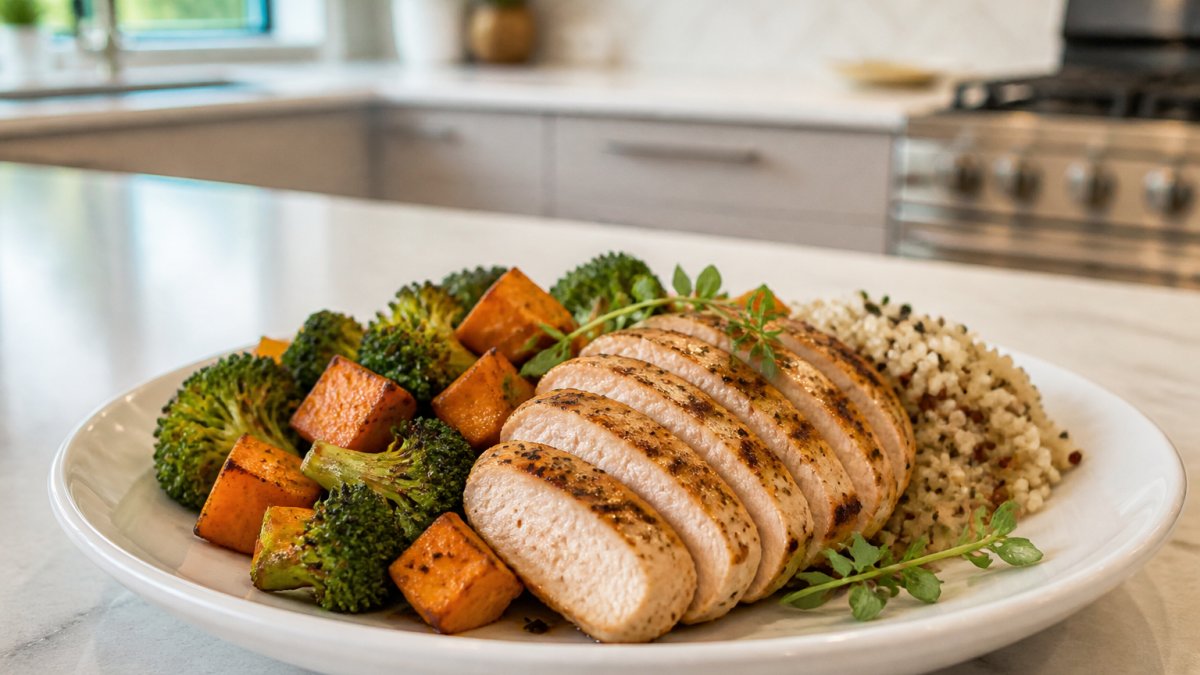
Look for services with diverse protein sources: grilled chicken, baked fish, lean beef, plant-based proteins. Variety ensures different micronutrients and prevents meal fatigue. A service with 5-7 protein options per week beats one rotating between 2-3.
Check the protein content on each meal, aim for 25-35 grams per prepared meal. Some services list this on their website; others require you to ask. Services designed specifically for health-conscious customers usually highlight protein content prominently because they know it matters.
Meal Delivery for Weight Loss During Menopause
Weight loss during menopause is harder because metabolism slows and insulin resistance rises. Portion control alone often fails; you need the right combination of nutrients to create a sustainable deficit without intense hunger or fatigue.
Meal delivery services designed for menopause weight loss typically use three strategies:
- Portion control, meals are sized for weight loss, not maintenance
- Protein emphasis, higher protein creates satiety and preserves muscle during calorie deficit
- Nutrient density, every calorie delivers nutrition rather than empty carbohydrates
The advantage over DIY dieting is consistency. When meals arrive portioned and prepared, there’s no daily decision about how much to eat, no portion creep, no “just this once” decisions that derail progress.
Meal delivery for weight loss works best combined with professional support. At Thrive Health Solutions, medical weight loss support can address hormonal factors, and structured meal delivery can provide a consistent foundation.
Avoid services that promise rapid weight loss through extreme restriction. Menopause weight loss should target 1-2 pounds per week, not more. Faster loss often means muscle loss and metabolic slowdown that makes regaining weight easier later.
What to Look for in a Local Meal Delivery Service
1. Confirm service availability by address, not metro area. Regional coverage may still exclude your neighborhood or add a surcharge.
2. Get the true cost per meal. Add menu price, delivery fee, and any subscription or packaging charge, then divide by servings you’ll actually eat.
3. Check ordering deadlines and lead time. Some services require orders 5-7 days before delivery; others accept changes 2-3 days out.
4. Review nutrition data before ordering. Look for calories, protein, total and saturated fat, fiber, sodium, and added sugars per serving, plus ingredients and allergen disclosure.
**5.
6. Confirm dietary accommodations. If you avoid dairy, gluten, or specific allergens, ask whether meals are prepared in a shared facility and how cross-contact is managed.
7. Check reheating and packaging. Microwave-safe trays and clear reheating instructions reduce the energy required on low-energy days. Ask whether containers are recyclable or compostable and whether meals arrive fresh or frozen.
| Factor | Why It Matters | What to Ask Before Ordering |
|---|---|---|
| Delivery area | Service must reach your exact address | Is my full address in the delivery zone? Are there surcharges? |
| True cost per meal | Menu price alone is misleading | What are the delivery fee, minimum order, and subscription charges? |
| Ordering deadline | Determines flexibility | What is the cutoff time in my time zone? Can I skip a week? |
| Nutrition data | Supports protein, fiber, sodium, and bone-health goals | Are calories, macros, fiber, sodium, and allergens published per serving? |
| Menu variety | Prevents boredom and nutrient gaps | How many entrées weekly? How often does the menu rotate? |
| Dietary accommodations | Ensures meals fit your needs | How are allergens and cross-contact handled? |
| Reheating and packaging | Fits your energy level and values | Microwave or stovetop? Fresh or frozen? Recyclable? |
Before your first order, ask customer service for a sample nutrition panel and a sample week of menus. A service that cannot provide both is unlikely to give you the transparency you need to match meals to your health goals.
A note on affordability and assistance. Budget-conscious shoppers can compare cost per serving and choose fewer meals per week to control spending. Some medically tailored meal programs operate through health plans, community organizations, or clinical referrals, and eligibility varies; ask your clinician or insurer whether you qualify. Not every program is designed for menopause-specific needs, so confirm coverage before relying on it.
Ordering, Delivery, and Getting Started
Starting with a meal delivery service is straightforward, but a few steps smooth the transition.
Step 1: Assess your needs. Clarify what matters most: weight loss, symptom management, convenience, or all three? Any dietary restrictions or strong preferences? How many meals per week?
Step 2: Check service availability. Enter your zip code on each service’s website.
Step 4: Start with a smaller first order. Many services let you order just 3-5 meals the first week. Use this to test quality, taste, and reheating.
Step 5: Set a delivery day and stick with it. Once you’ve chosen a service, pick a consistent delivery day each week.
Step 6: Provide feedback to the service. If meals didn’t work for you, tell them. Most services adjust future deliveries based on customer feedback. If something worked exceptionally well, request it again.
The biggest mistake people make is overcommitting on the first order. Start small, test the service, then scale up once you’ve confirmed it works for you.
Conclusion
Meal delivery menopause services remove a major barrier to consistent nutrition when your body needs it most. The right prepared meals stabilize energy, support weight management, and reduce the decision fatigue that derails most plans.
At Thrive Health Solutions, we believe combining structured meal delivery with professional medical support can contribute to sustainable results. When you eliminate the daily friction of meal planning and cooking, you free mental and physical energy for other aspects of your health, like the bioidentical hormone replacement therapy and medical weight loss support that address menopause symptoms. The meals can become your consistent foundation; medical oversight can be a valuable component.
Ready to take the next step? Schedule a consultation with Thrive Health Solutions to discuss how personalized nutrition and medical support can work together to help you feel your best during menopause.
Frequently Asked Questions
What nutrients should I prioritize in a menopause meal plan?
During menopause, focus on calcium and vitamin D for bone health, omega-3 fatty acids for mood and inflammation, and adequate protein to maintain muscle mass and manage weight. High-fiber foods help stabilize blood sugar and energy levels. Iron remains important if you’re still menstruating. A balanced meal delivery service will highlight these nutrients in their nutrition information and help you track intake across weekly menus.
Can high-protein meals for menopause actually help with weight management?
Yes. Protein increases satiety, meaning you feel fuller longer, and supports muscle preservation during hormonal shifts when metabolism naturally slows. Studies show protein intake of 1.2 to 1.6 grams per kilogram of body weight helps maintain lean mass during midlife. Meal delivery services that emphasize chef-prepared, nutrient-rich portions make consistent protein intake easier than cooking alone, especially for busy professionals managing multiple demands.
How quickly will I see results from meal delivery for weight loss during menopause?
Results vary by individual and depend on starting point, activity level, and adherence. Most people notice improved energy and mood within 2-3 weeks of consistent, balanced nutrition. Weight changes typically appear within 4-6 weeks. Meal delivery removes decision fatigue and reheating convenience supports consistency, which is the strongest predictor of results. A medical provider can set realistic timelines based on your specific situation.
Do meal delivery services offer options for common menopause dietary restrictions?
Most established services accommodate dairy-free, gluten-free, and lower-sodium options. If you have allergies, food sensitivities, or follow specific dietary patterns, verify that the service offers weekly menu variety in your preferred category and clearly labels allergens. Ordering deadlines and delivery schedules vary, so confirm they can meet your needs before committing to a subscription.